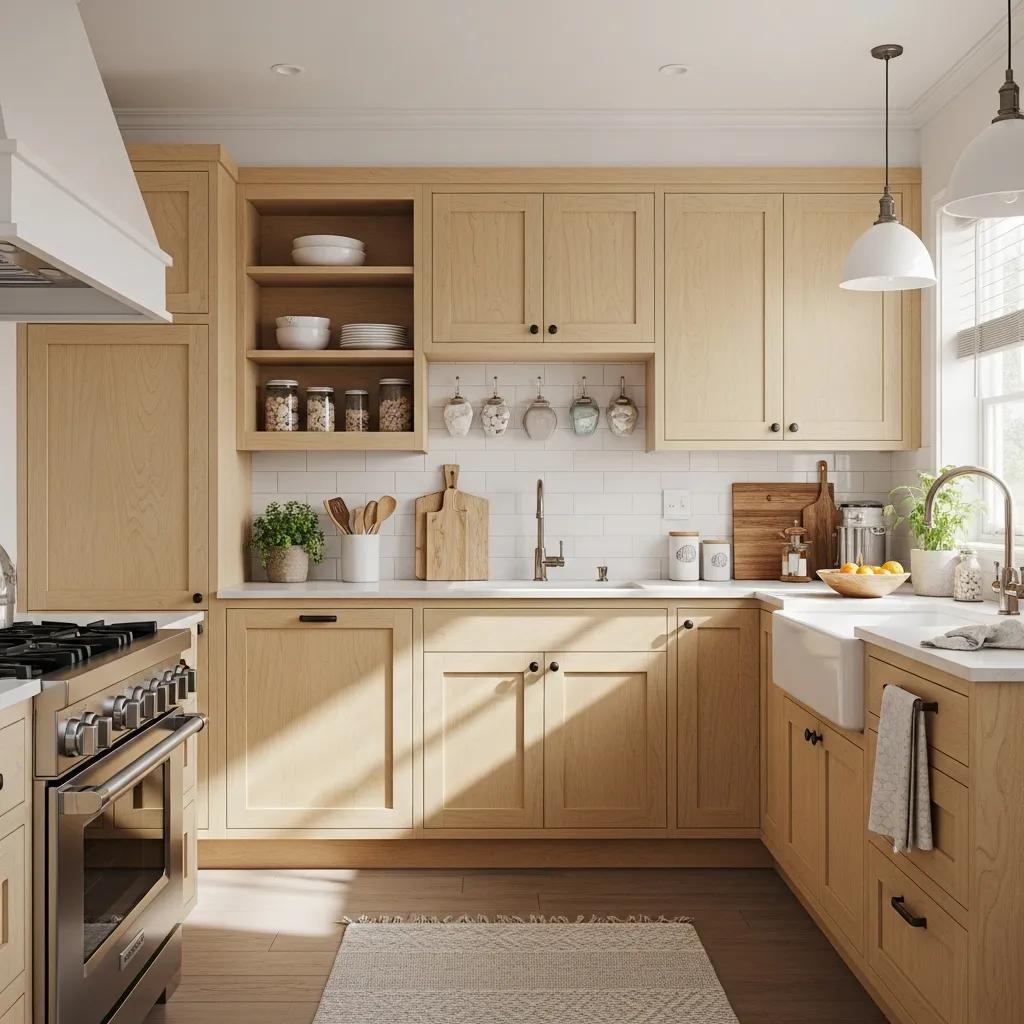
When a kitchen starts to feel outdated, cabinets are usually the first thing homeowners notice. The doors may look worn, the finish might feel dated, or the whole kitchen just doesn’t function the way it should anymore. At that point, many homeowners start asking the same question: Should we replace the cabinets entirely, or just reface them?
Both options can update the look of your home. But in many Cape Cod kitchens, especially older ones, the right choice often depends on more than appearance. Layout, cabinet structure, and storage needs all play an important role. Understanding the difference can help you make a decision that works not just for today, but for years to come.
Quick Answer: Should You Replace or Reface Kitchen Cabinets?
For many homeowners, cabinet refacing works best when the existing cabinet boxes are solid, and the kitchen layout already functions well. However, if cabinets are worn, storage is limited, or the layout needs improvement, replacing cabinets usually provides better long-term value and flexibility.
In older Cape Cod homes, cabinet replacement is often the better option because it allows homeowners to improve both storage and kitchen layout at the same time.
What Cabinet Refacing Actually Means
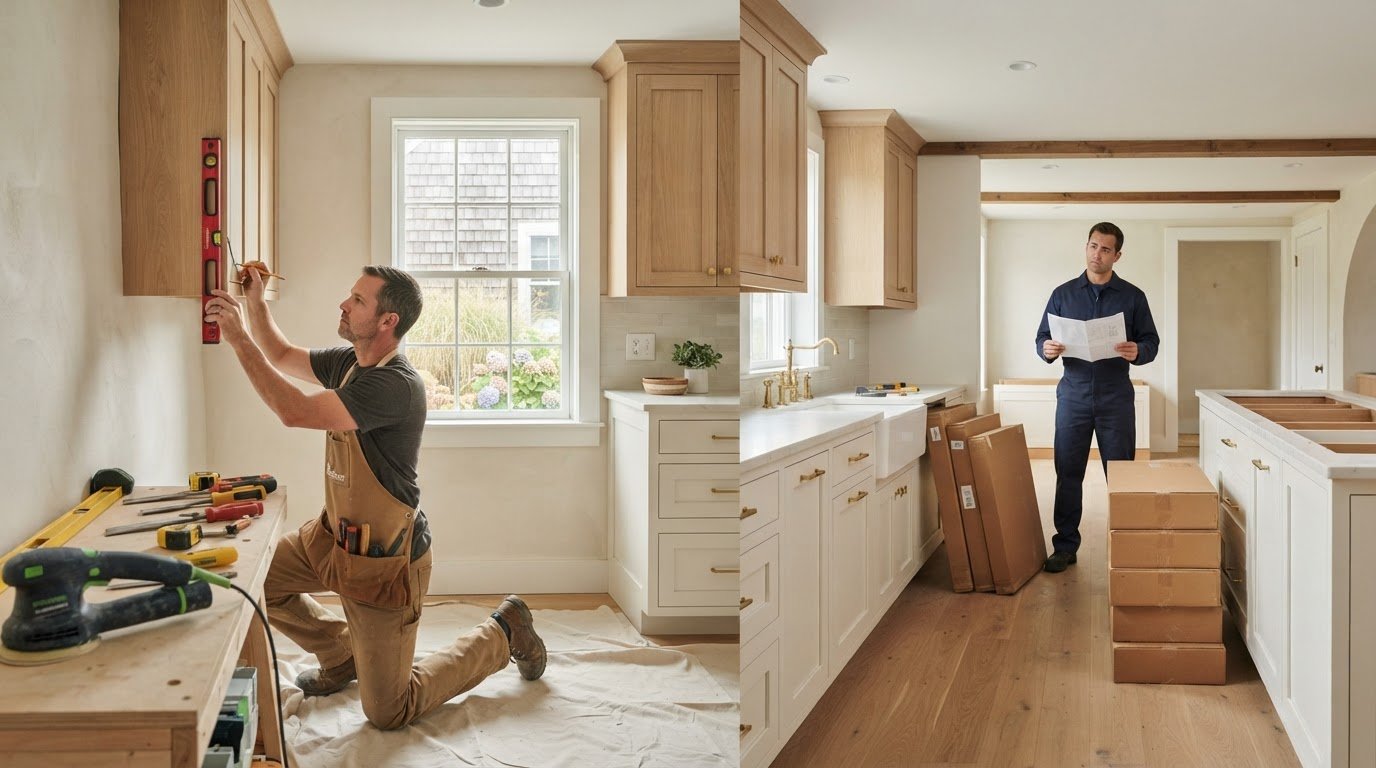
Cabinet refacing focuses mainly on the visible parts of your cabinets. Instead of removing the entire cabinet system, the existing cabinet boxes stay in place. The cabinet doors and drawer fronts are replaced, and a thin veneer or matching finish is applied to the exterior surfaces so everything looks new.
From the outside, the kitchen can look completely refreshed, but what doesn’t change is the cabinet layout itself. The location, size, and structure of the existing cabinets remain exactly the same. For kitchens that already work well but simply look dated, refacing can sometimes be a practical cosmetic update.
When Cabinet Refacing Makes Sense
Refacing tends to work best when the cabinets are already in strong structural condition, and the kitchen layout is functional. Some homeowners choose refacing when:
- Cabinet boxes are solid and undamaged
- The current layout already works well for cooking and storage
- Only the appearance of the doors feels outdated
- The goal is a visual refresh rather than a functional change
In these situations, updating the doors and exterior surfaces can provide a noticeable improvement without altering the structure of the kitchen.
Why Refacing Can Be Difficult in Older Cape Cod Kitchens
Many kitchens across Cape Cod were built decades ago, and those homes often come with challenges that refacing alone cannot solve. Cabinet boxes may have shifted slightly over time due to uneven floors. Storage layouts were often designed for smaller appliances and fewer kitchen tools. Some cabinets may also show wear in hinges, shelving, or interior surfaces.
In these situations, replacing only the doors may improve appearance but leave the original functional problems in place. Homeowners sometimes realize after refacing that the kitchen still feels cramped or inefficient, because the underlying cabinet structure never changed.
Cabinet Refacing vs. Replacement: Key Differences
The simplest way to understand the options is to look at what each approach actually changes.
| Feature | Cabinet Refacing | Cabinet Replacement |
| Cabinet boxes | Stay in place | Completely replaced |
| Layout | Stays the same | Can be redesigned |
| Storage improvements | Very limited | Fully customizable |
| Installation scope | Exterior updates only | Full cabinet installation |
| Long-term flexibility | Lower | Much higher |
For homeowners who are happy with their current layout, refacing can sometimes work well. But when a kitchen needs better organization, improved storage, or a new layout, replacement usually offers more flexibility.
The Cost Question Homeowners Often Ask
Many people assume refacing is dramatically cheaper than installing new cabinets. Sometimes that’s true, but the difference is not always as large as expected.
Refacing still involves custom door fabrication, veneer work, labor to apply finishes, and careful adjustments to existing cabinets. If the original cabinet boxes are worn or slightly uneven (which is common in older homes), extra work may also be required to make everything align properly.
Because of that cost analysis, some homeowners choose replacement once they realize the project can also improve layout, storage, and long-term durability.
What Many Cape Cod Homeowners Choose Instead
In many remodeling projects across the Cape, homeowners decide to replace cabinets once they start thinking about how the kitchen could function better. Replacing cabinets allows improvements that refacing simply can’t provide, such as deeper drawers, better corner storage, improved cabinet heights, and more efficient layouts.
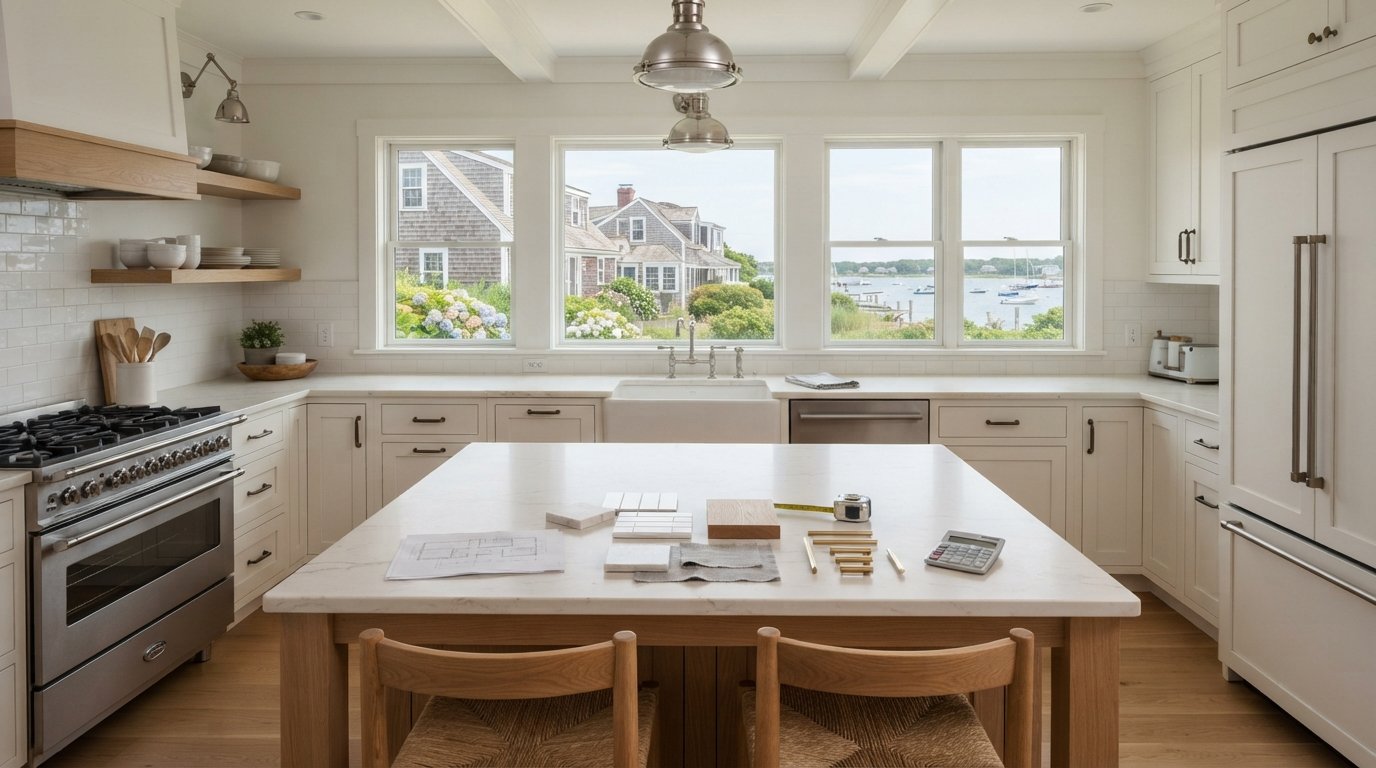
Shaker-style cabinets are especially popular because their simple design works well in both traditional and coastal-style kitchens. They also tend to stay visually timeless even as other design elements change.
For many homeowners, the opportunity to improve storage and workflow ends up being just as valuable as the visual upgrade.
A Simple Way to Decide What’s Right for Your Kitchen
If you’re trying to decide between refacing and replacing cabinets, a few questions can help clarify the best path forward. Think about the current kitchen honestly:
- Do the cabinets feel sturdy and well-built?
- Does the layout work well for how you cook and move through the space?
- Is storage sufficient for what you actually use every day?
- Are you planning to stay in the home long-term?
If the structure and layout already work well, refacing may be enough. But if the kitchen feels inefficient or cramped, replacing cabinets usually creates a more meaningful improvement.
Making the Right Long-Term Choice
Kitchen cabinets shape how the entire space functions. They affect storage, workflow, lighting, and how open or crowded the kitchen feels. Refacing can refresh a kitchen’s appearance when the underlying layout already works. But when cabinets are worn, poorly arranged, or limited in storage, replacement often creates a much more satisfying result.In many Cape Cod homes, where kitchens were built for a different era of cooking and appliances, upgrading the cabinet layout can transform the space in ways that new doors alone simply can’t. Taking time to evaluate the structure of the kitchen, not just its appearance, usually leads to the best long-term decision.