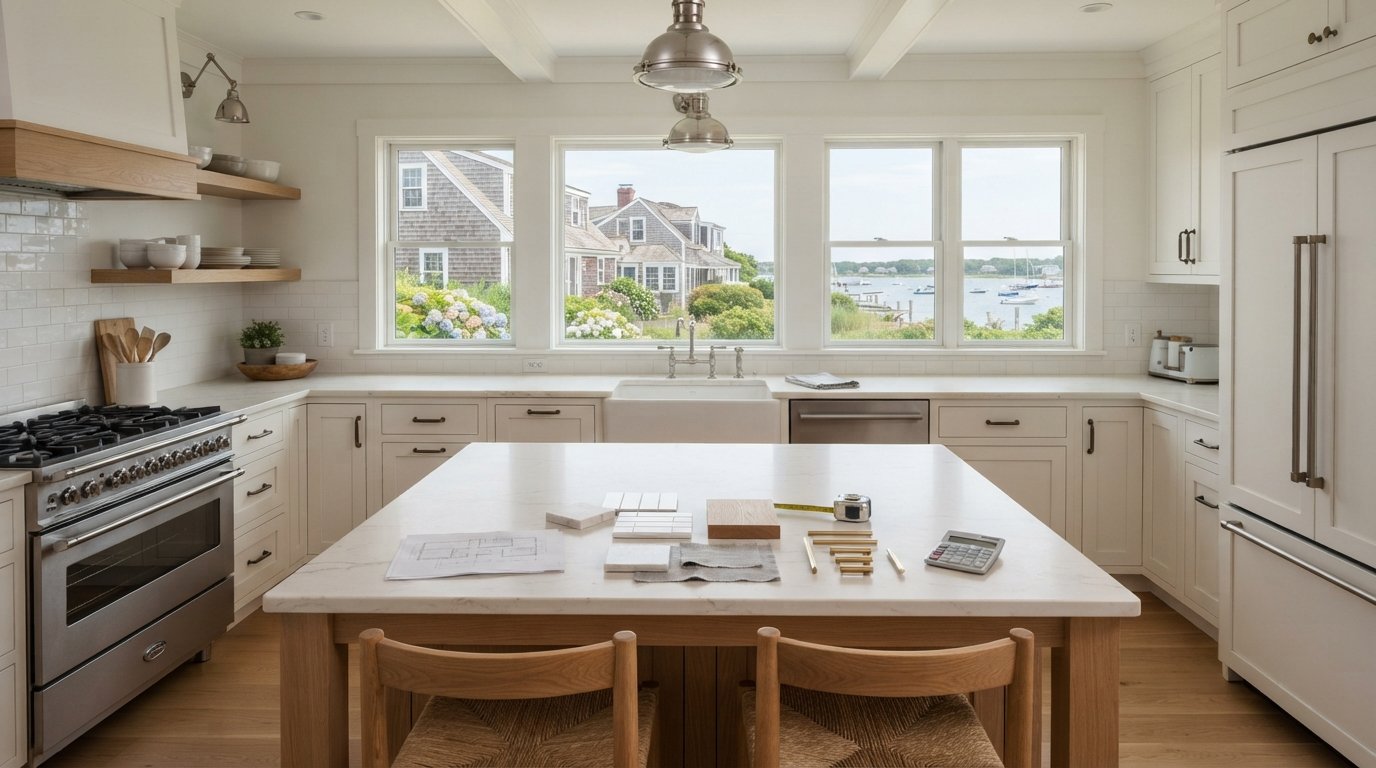
Cape Cod kitchens deal with conditions that many inland homes never have to think about. Between humid summers, salty ocean air, and older homes that weren’t always built with modern ventilation in mind, cabinets can experience more wear over time.
Homeowners often start noticing the signs slowly. Cabinet doors may swell slightly during humid months. Hardware can start to corrode. Painted finishes sometimes show wear faster than expected.
Because of this, choosing the right kitchen cabinet design, materials, and construction becomes especially important when remodeling a kitchen near the coast. Understanding what actually holds up best in coastal environments can help you make a choice that looks great now and still performs well years from now.
Quick Answer: What Cabinets Work Best in Coastal Kitchens?
Cabinets that perform best in Cape Cod homes typically combine moisture-resistant cabinet boxes, durable finishes, and corrosion-resistant hardware.
Well-built plywood cabinet boxes, sealed painted finishes, and stainless or coated hardware tend to handle humidity and salt exposure better than cheaper materials. Just as important, proper installation and ventilation help prevent moisture buildup that can shorten cabinet lifespan.
In many Cape Cod homes (especially older kitchens), cabinet construction and installation matter just as much as the material itself.
Why Coastal Conditions Affect Kitchen Cabinets
Salt and humidity can affect cabinets in subtle ways over time. Moisture in the air can cause certain wood products to expand and contract slightly with seasonal changes. Salt particles carried in coastal air may settle on surfaces and hardware, which can eventually lead to corrosion if materials aren’t designed to resist it.
This doesn’t mean coastal homes need completely different cabinets. It simply means that durability and proper sealing matter more than they might in a dry inland climate.
Older homes on Cape Cod sometimes add another layer of complexity. Uneven floors, tighter kitchen layouts, and limited ventilation can allow humidity to linger in the room longer than in newer construction. That’s why cabinet structure and installation quality often play a major role in long-term performance.
Cabinet Materials That Handle Humidity Well
Some cabinet materials naturally perform better in humid environments than others. The goal is to choose materials that resist swelling, warping, and finish breakdown. Here’s a simple comparison of common cabinet box materials used in modern kitchens:
| Cabinet Material | Why It Performs Well | Typical Use |
| Plywood cabinet boxes | Strong layered construction resists moisture movement | Most quality cabinet systems |
| Moisture-resistant MDF | Smooth surface for painted finishes | Painted cabinet doors |
| Laminate surfaces | Non-porous and easy to clean | Budget-friendly cabinet options |
Among these, plywood cabinet boxes are widely considered one of the most durable choices for kitchens exposed to humidity. Their layered structure helps them remain stable even when moisture levels fluctuate throughout the year.
Many modern Shaker-style cabinet systems combine plywood cabinet boxes with painted MDF doors, creating a balance of durability and smooth finish quality.
Cabinet Finishes That Last Near the Ocean
The finish on a cabinet is just as important as the material underneath.
High-quality painted finishes that are properly sealed tend to perform well in coastal kitchens because they create a protective barrier against humidity. Factory-finished cabinets usually hold up better than cabinets painted on-site because the finish is applied in controlled conditions.
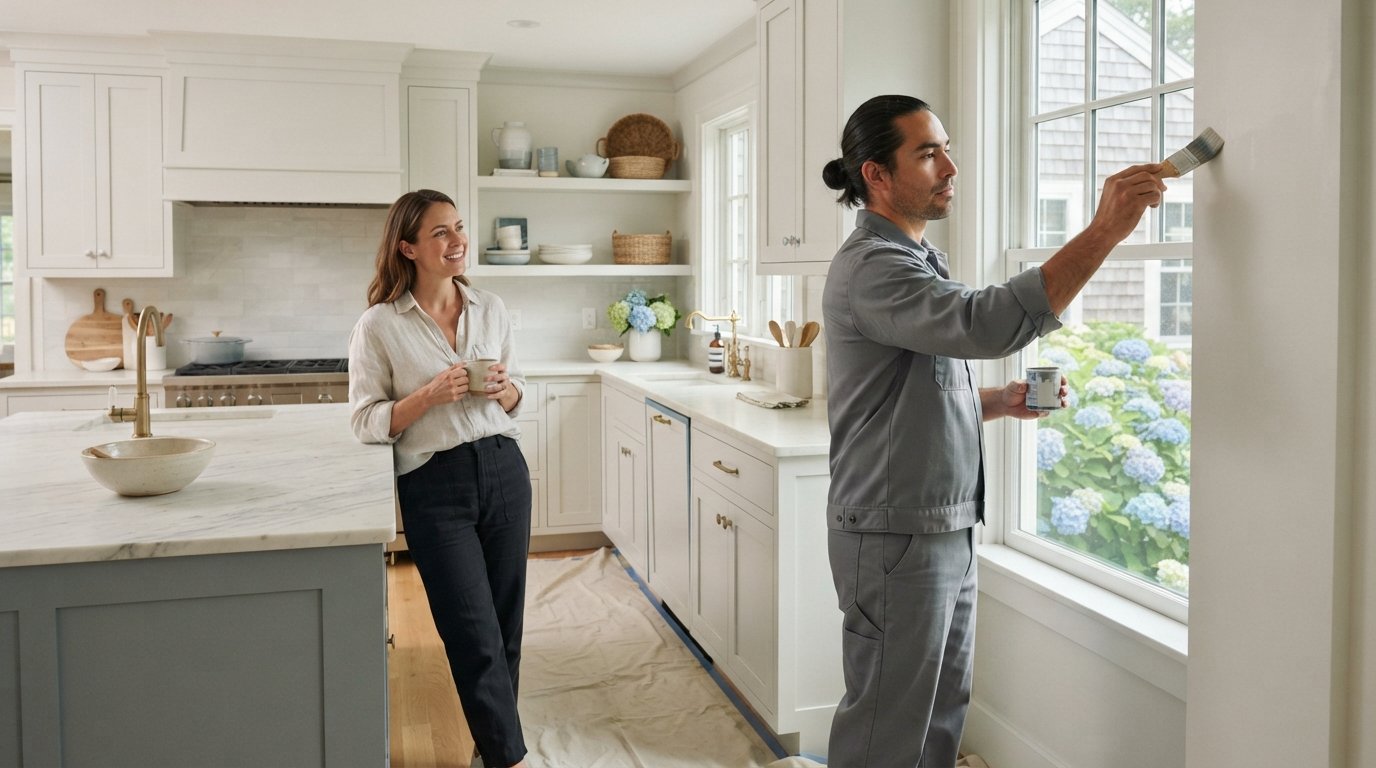
Neutral painted colors, such as warm white or soft gray, are especially popular across Cape Cod kitchens because they fit both traditional and coastal-style homes while hiding minor wear better over time. Natural wood cabinets can also perform well, but they require careful sealing and regular maintenance to prevent moisture from affecting the wood grain.
Hardware and Small Details Matter More Than Most People Expect
In coastal environments, even small cabinet components can influence long-term durability.
Standard steel hinges or drawer slides may eventually show corrosion if exposed to salty air over many years. Higher-quality cabinets typically include hardware designed to resist rust and wear. Examples of hardware that tends to perform better in coastal homes include:
- Stainless steel or coated hinges
- Soft-close drawer slides with protective finishes
- Corrosion-resistant screws and fasteners
These details may seem minor during installation, but they often determine how smoothly cabinets operate after several years of daily use.
Installation Quality Is Just as Important as Materials
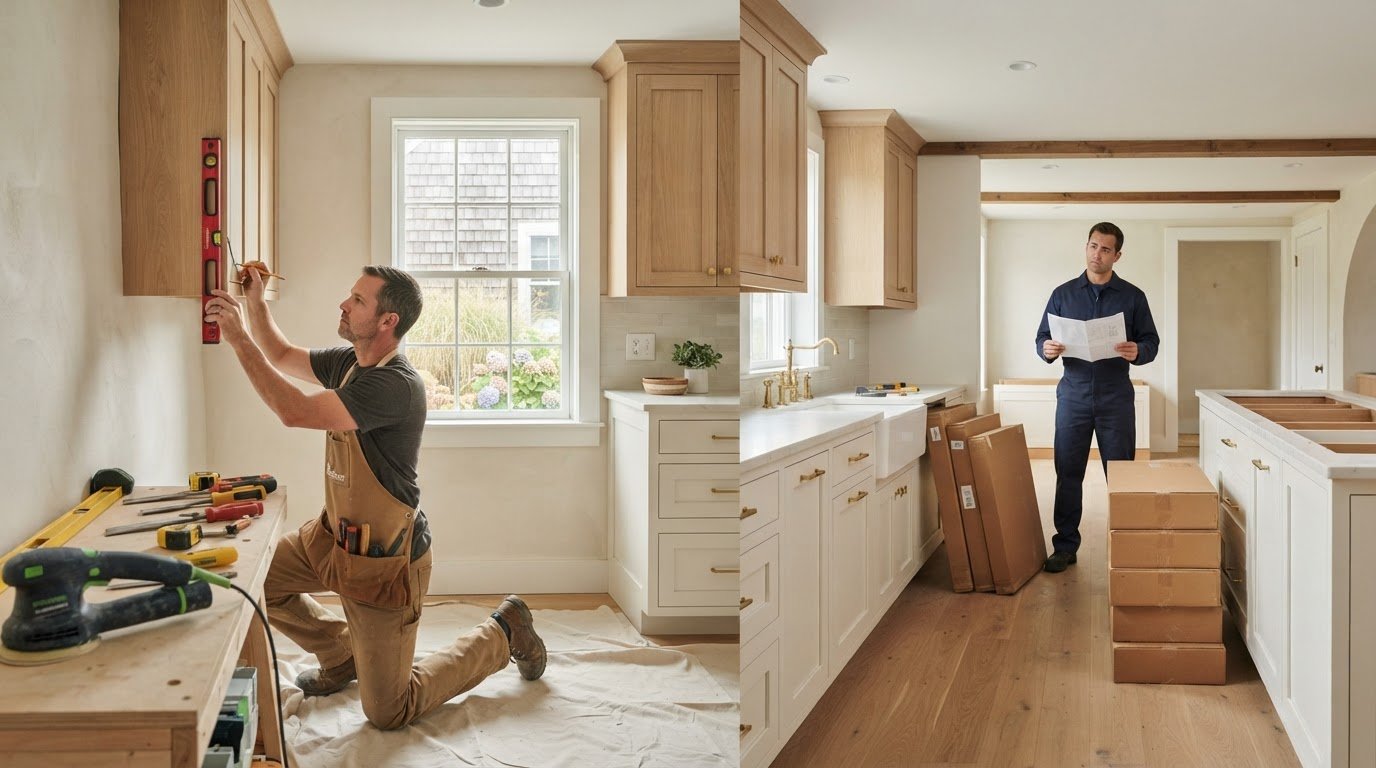
Even the best cabinet materials won’t perform well if they aren’t installed correctly. Many Cape Cod homes were built decades ago, and kitchen floors or walls are not always perfectly level. Cabinets that are installed without careful adjustment can develop stress points that eventually cause doors to shift or drawers to misalign.
Professional installation ensures cabinets are leveled properly, secured safely to the wall structure, and positioned to allow airflow around them. Proper spacing and sealing help prevent moisture from becoming trapped behind cabinets. In coastal homes where humidity can already be high, these installation details can significantly improve how long cabinets last.
Simple Maintenance That Helps Cabinets Last Longer
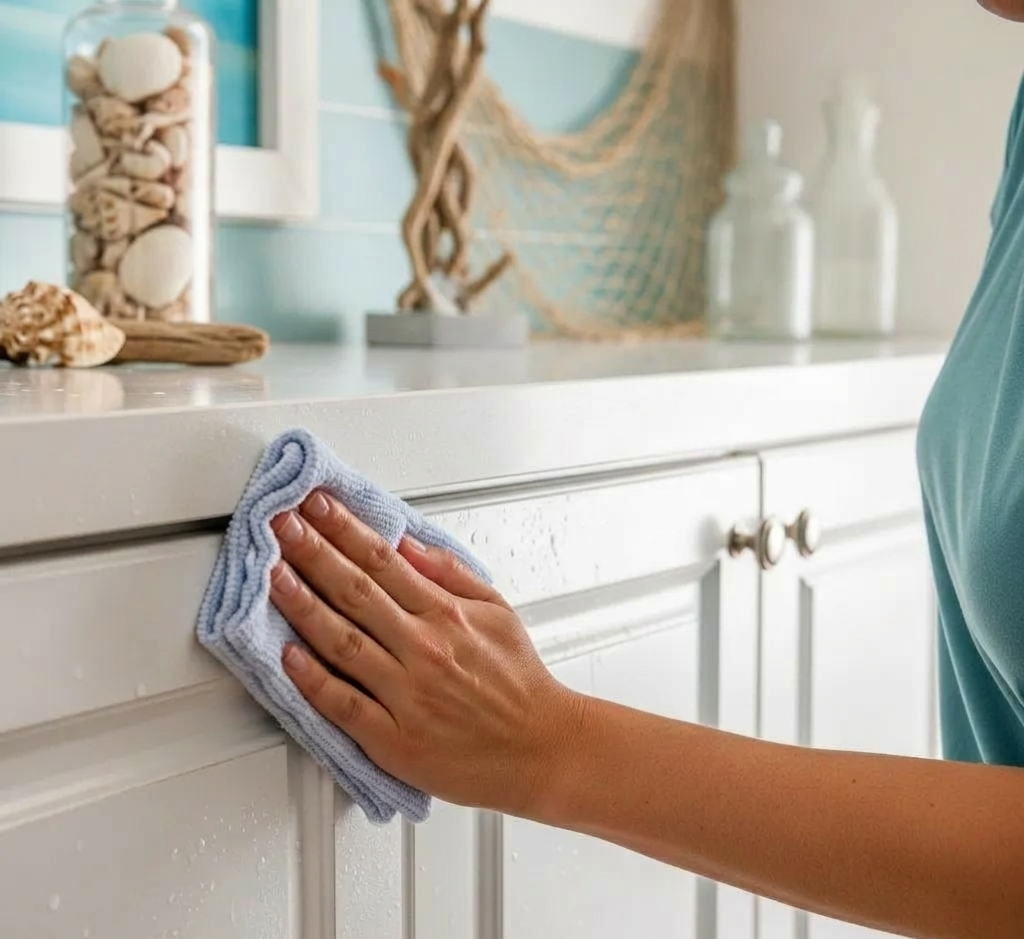
Coastal kitchens benefit from small maintenance habits that protect cabinet surfaces from salt and humidity. Wiping cabinet surfaces occasionally with a damp cloth helps remove salt residue that may accumulate over time. Keeping kitchen ventilation fans running while cooking can also reduce humidity levels in the room.
Homeowners should occasionally check cabinet doors and hardware for early signs of wear. Catching minor issues (like loose hinges or worn finishes) early often prevents larger repairs later.
Choosing Cabinets That Stay Strong for Years
Cape Cod kitchens face conditions that make durability especially important. Cabinets that combine stable construction, protective finishes, and corrosion-resistant hardware tend to perform best in coastal homes.Just as important, professional cabinet installation and thoughtful kitchen design can prevent many of the issues that cause cabinets to wear prematurely. When cabinets are built with the right materials and installed carefully, they can hold up beautifully even in the humidity and salt air common throughout coastal Massachusetts.