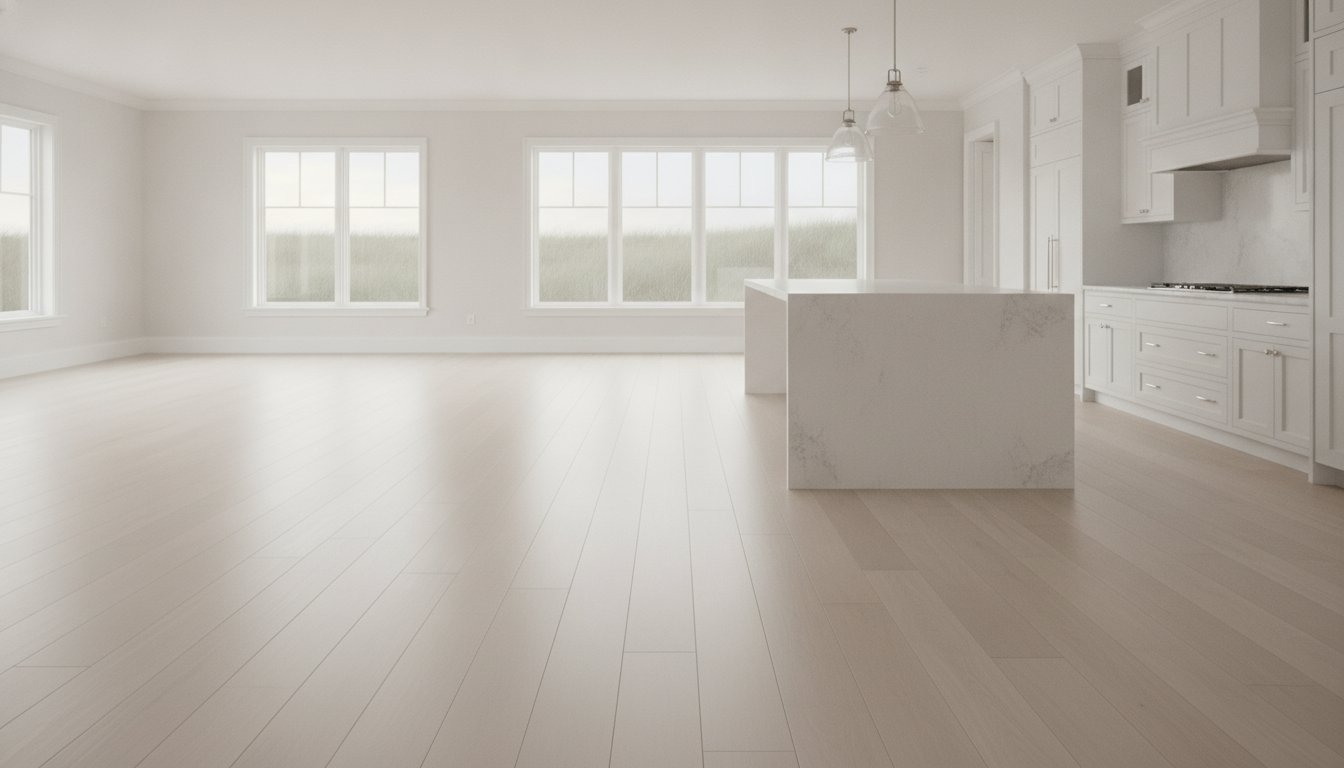
The salt air and sweeping dunes that make Cape Cod a paradise are also the greatest threats to your home’s interior foundation. When planning a kitchen flooring installation Cape Cod residents often find themselves caught between the desire for timeless hardwood and the reality of our coastal climate. You know that the wrong choice can lead to warped planks or finishes ruined by abrasive sand before the first summer season is even over.
We understand that your home is a sanctuary that needs to stand up to the unique environmental pressures of Barnstable County. Whether you live in Sandwich, Hyannis, or Falmouth, you deserve a floor that remains as stable in a humid August as it does in a dry January. This 2026 guide is designed to be your practical resource for choosing materials that resist the Cape’s 80% summer humidity swings while adding lasting value to your property.
We will explore which wood species perform best under coastal pressure, the technical secrets to proper acclimation, and how to coordinate your new floors with a kitchen remodel. You’ll gain the expert knowledge needed to ensure your investment stays beautiful and functional for decades to come.
Key Takeaways
- Understand why engineered hardwood is often the superior choice for handling the Cape’s dramatic seasonal humidity shifts.
- Identify the three primary environmental threats to coastal floors and how the right finish can repel sand and salt.
- Learn the technical requirements for a kitchen flooring installation Cape Cod projects demand, including why you shouldn’t skip moisture testing.
- Discover the most effective ways to sequence your renovation so your hardwood floors and Shaker-style cabinets integrate seamlessly.
- Break down the specific variables that influence your total investment, from material rarity to essential subfloor preparation.
The Cape Cod Hardwood Dilemma: Choosing Quality for Coastal Homes
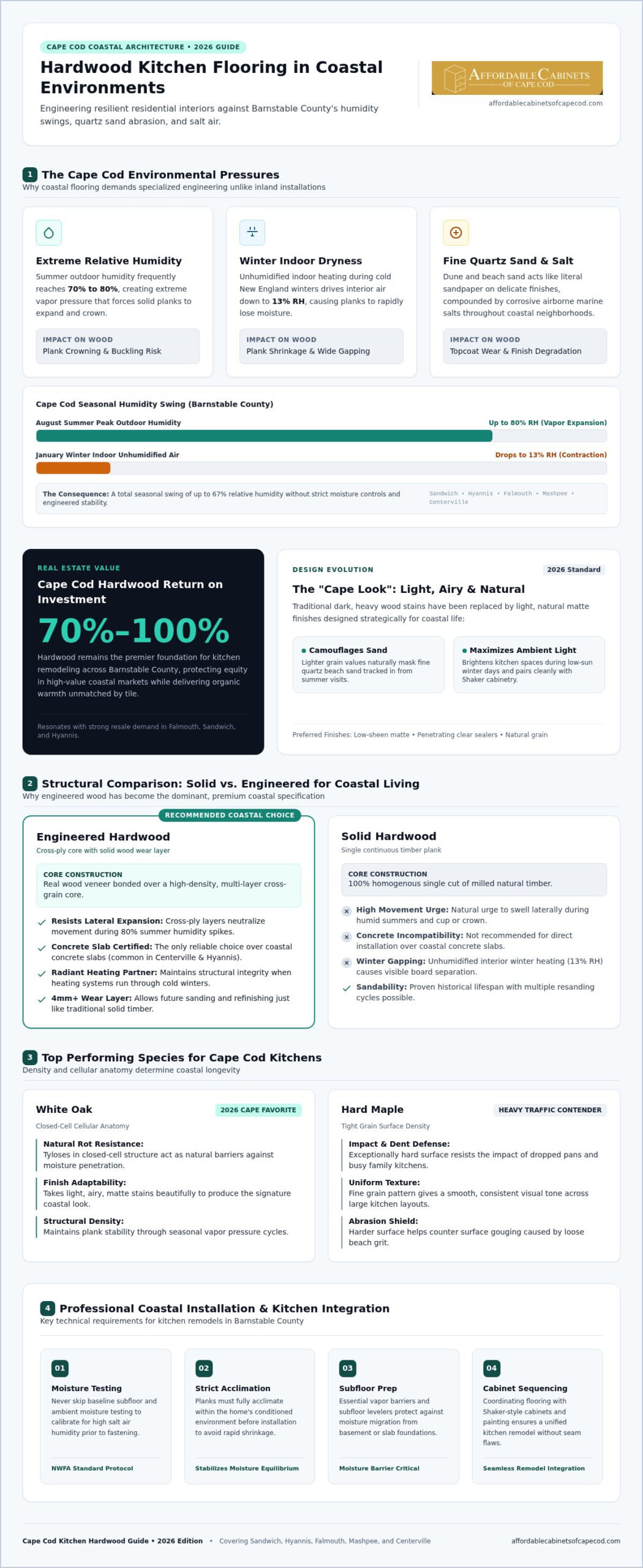
Choosing a floor in Mashpee or Sandwich isn’t just about picking a favorite color. It’s about engineering for a unique environment. A successful kitchen flooring installation Cape Cod homeowners can trust requires balancing high-end aesthetics with extreme environmental resilience. While dark, heavy stains were once popular in traditional builds, the modern 2026 “Cape Look” leans toward light, airy, and natural tones. These lighter palettes don’t just brighten a room; they’re far better at hiding the inevitable track-in from the beach. Hardwood remains the gold standard here because it offers a 70% to 100% return on investment, a figure that resonates with the high property values found across Barnstable County.
Sand, Salt, and Humidity: The Cape Environment
Coastal living introduces three relentless enemies: abrasive sand, corrosive salt air, and dramatic seasonal humidity. During the summer, outdoor relative humidity often exceeds 70% to 80%. This vapor pressure forces wood to expand, often leading to “crowning” where the center of the plank rises. When winter arrives, unhumidified indoor air can drop to 13%, causing the wood to shrink and gap. Beyond moisture, the fine quartz sand found on our beaches acts like sandpaper on delicate floor finishes. Without professional-grade moisture barriers and tough, modern topcoats, even the most expensive floor won’t last more than a few seasons.
Why Hardwood is a Timeless Investment
Despite the environmental challenges, hardwood is the preferred foundation for a comprehensive kitchen remodeling Cape Cod project. It provides a tactile warmth that tile simply cannot match, creating a true coastal sanctuary. When you’re deciding between solid versus engineered hardwood flooring, local expertise becomes vital. Engineered options are increasingly dominant on the Cape because their cross-ply construction resists the lateral expansion caused by our salt-heavy air. Investing in quality flooring doesn’t just improve your daily life; it ensures your home remains competitive in a real estate market that values authentic, high-quality finishes. Working with a contractor who handles your cabinets, painting, and flooring together ensures these elements work as a cohesive design rather than a collection of separate parts.
Comparing Hardwood Options: Solid vs. Engineered for Cape Cod
Choosing the right material for your kitchen flooring installation Cape Cod project often comes down to a choice between solid and engineered structures. Solid hardwood is exactly what it sounds like: a single, continuous plank of timber. Engineered hardwood, by contrast, features a top layer of real wood bonded over a high-density core of cross-ply layers. Don’t fall for the common myth that engineered wood is a “budget” or “fake” alternative. In our coastal environment, engineered planks are often the premium choice because their construction resists the natural urge of wood to expand and contract. When you select your flooring, pay close attention to the wear layer. A thick wear layer (4mm or more) ensures you can sand and refinish the floor in the future, just like solid wood.
Species selection is equally critical for kitchen performance. White Oak has become the 2026 favorite for Cape homes due to its closed-cell structure and natural resistance to rot. It’s a dense wood that handles the “Cape Look” of light, matte stains beautifully. Maple is another strong contender, offering a harder surface that resists the dents and dings common in a busy kitchen. If you are debating between these species for your home, you can consult with a local flooring specialist to see samples in your own kitchen’s natural light.
The Case for Engineered Wood in High-Humidity Zones
Engineered wood is the workhorse of coastal renovations. Its cross-grain construction acts as a stabilizer, preventing the planks from warping when the Cape’s summer humidity hits 80%. This stability makes it the only reliable choice for homes with concrete slab foundations, which are common in areas like Centerville or Hyannis. It’s also the preferred partner for radiant heating systems. Because engineered wood is less prone to drying out and gapping, it maintains its integrity even when the heat is running throughout a long New England winter. Following NWFA moisture management guidelines is essential here, as keeping your indoor relative humidity between 30% and 50% will protect your warranty and your investment.
When to Stick with Traditional Solid Hardwood
Traditional solid hardwood is often called the “100-year floor” for good reason. If you live in a primary residence with a robust HVAC system that maintains consistent humidity year-round, solid wood offers unmatched longevity. You can sand and refinish a solid 3/4-inch plank half a dozen times over several decades. This is a significant advantage for families who expect heavy wear and want the ability to completely change their floor’s color in ten years. Solid wood feels incredibly sturdy underfoot, but it requires a disciplined homeowner. Without consistent climate control, you may see significant gapping during the winter when indoor humidity can plummet to 13%. Homeowners who prefer a waterproof alternative should also explore vinyl plank flooring Cape Cod options, which offer sand and moisture resistance without the humidity management demands of solid wood.
Calculating the Cost of Hardwood Flooring Installation on Cape Cod
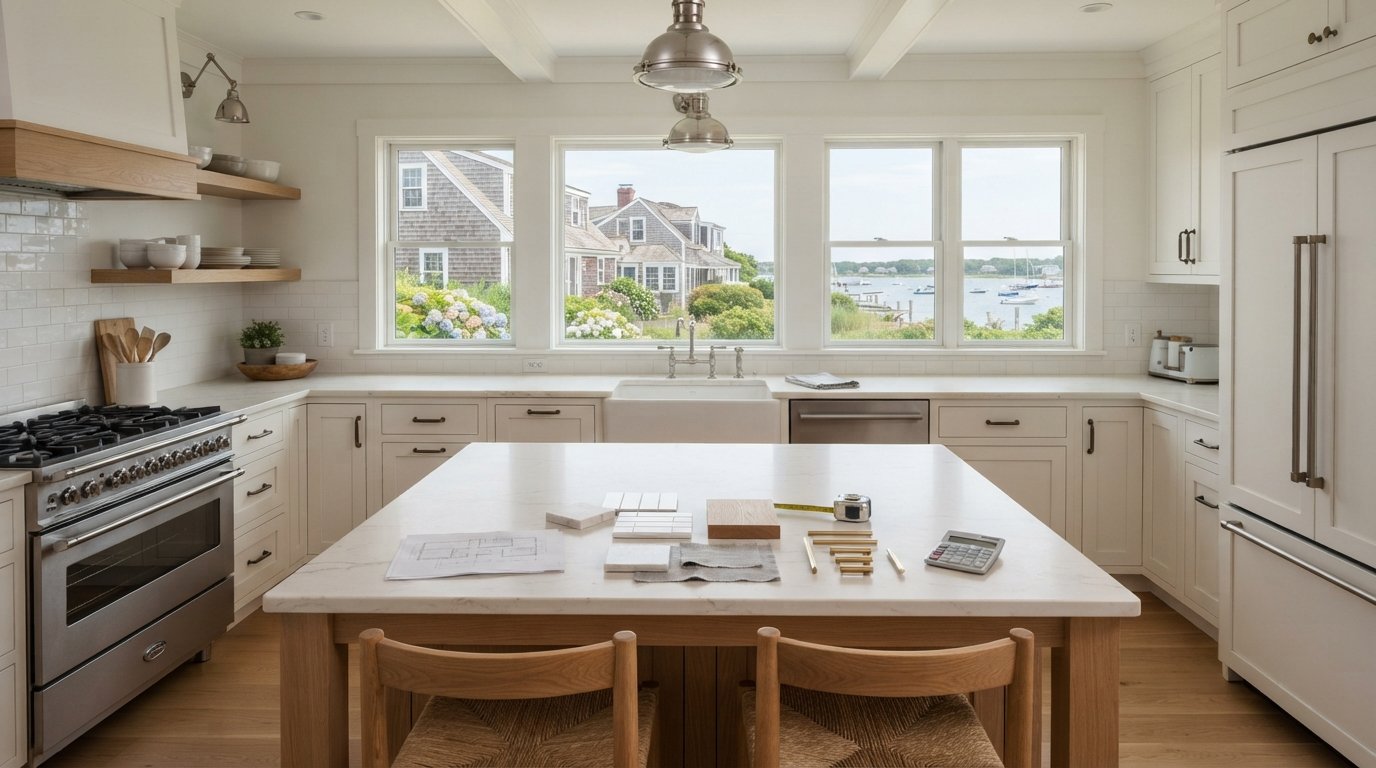
Budgeting for your home involves more than just picking a material price tag. The total investment for a kitchen flooring installation Cape Cod project depends on several local variables. You have to consider the rarity of the species, the width of the planks, and the current state of your subfloor. Many homeowners are surprised by the additional costs that don’t appear on a material list, such as moving heavy furniture, removing existing tile or linoleum, and the intricate trim work needed to finish the baseboards. Utilizing professional kitchen design services Cape Cod specialists offer can help you visualize the layout and minimize waste, ensuring every plank is accounted for before the first nail is driven.
The choice between pre-finished and site-finished wood also impacts your long-term value. Pre-finished planks are coated in a controlled factory environment, which often results in a harder, more durable surface that handles the Cape’s abrasive sand better. Site-finished floors allow for a perfectly level surface and custom stain colors, though they require more time and labor on-site. As a homeowner, you should also be aware of local regulations. In Massachusetts, any project over $1,000 requires a registered Home Improvement Contractor. By law, your initial deposit cannot exceed one-third of the total contract price. These protections ensure a transparent and fair process for your renovation.
Material Costs vs. Labor: Breaking Down the Estimate
Wide-plank flooring is a staple of the coastal aesthetic, but it often carries a premium because it requires more stability and careful installation. Labor in Eastern Massachusetts reflects a significant regional premium, sitting approximately 48% above the national average. While it might be tempting to choose the lowest estimate, those quotes often cut corners on essential subfloor preparation. Skipping moisture testing is a risk you can’t afford in Barnstable County. According to USDA Forest Service research on wood flooring dimensional change, hardwood is incredibly sensitive to shifting relative humidity. Without proper acclimation and prep, your floor could suffer from permanent structural damage.
Long-Term ROI: Impact on Resale Value
Hardwood is a top-tier feature in local real estate listings, often providing a return on investment between 70% and 100%. For those working with small kitchen design Cape Cod layouts, running the same hardwood from the living area through the kitchen creates a visual continuity that makes the entire home feel larger and more open. Over a twenty-year period, hardwood is often more cost-effective than carpet or laminate because it doesn’t need to be replaced; it simply needs an occasional refresh. It’s an investment that pays dividends in both daily enjoyment and future resale value.
The Professional Installation Process: From Acclimation to Finish
A successful kitchen flooring installation Cape Cod homeowners can rely on starts long before the first plank is nailed down. It begins with professional measurement and rigorous subfloor moisture testing. We use precision meters to ensure your subfloor isn’t holding onto hidden moisture from a damp crawlspace or a humid summer week. Once the site is prepared, we move into the non-negotiable acclimation phase. Only after the wood has stabilized do we begin the precision laying process. We use specific fastening patterns to prevent the squeaks that often plague older Cape homes. Finally, we move to the sanding and finishing stage, where we apply coastal-grade sealants designed to handle the abrasive nature of tracked-in sand.
Why Acclimation is the Most Critical Step
In towns like Mashpee or Falmouth, skipping the acclimation period is the fastest way to ruin a high-end floor. Acclimation is the process of equalizing wood moisture with its environment. Because wood is a porous material, it needs time to expand or contract to match the specific relative humidity of your kitchen. If you install wood that’s too dry, it will buckle when the July humidity hits. If it’s too damp, you’ll see unsightly gaps once the winter heating season begins. We typically recommend allowing the material to sit in your climate-controlled home until moisture meter readings confirm it has reached equilibrium.
Professional Sanding, Staining, and Sealing
Modern renovations don’t have to be a dusty nightmare. We utilize dustless sanding technology that captures up to 99% of airborne particles, keeping your kitchen and adjacent living areas clean. When it’s time to choose a finish, many local homeowners now opt for low-VOC water-based polyurethanes. These finishes dry faster and don’t leave behind the heavy chemical odors associated with traditional oil-based products. While oil-based polyurethanes offer a classic amber glow, water-based options provide superior scratch resistance against the fine quartz sand common on our beaches. To ensure your kitchen flooring installation Cape Cod project is handled with this level of technical care, contact our team for an on-site measurement and consultation.
In a high-traffic coastal kitchen, the durability of the topcoat is your primary defense against the salt and grit that inevitably find their way inside. Oil-based polyurethanes generally take longer to cure and can emit strong odors for days; whereas, water-based versions allow you to return to your normal routine much sooner. We’ll work with you to choose a finish that matches your lifestyle and the specific aesthetic goals of your remodel.
Beyond the Floor: Integrating Your Cabinets and Flooring
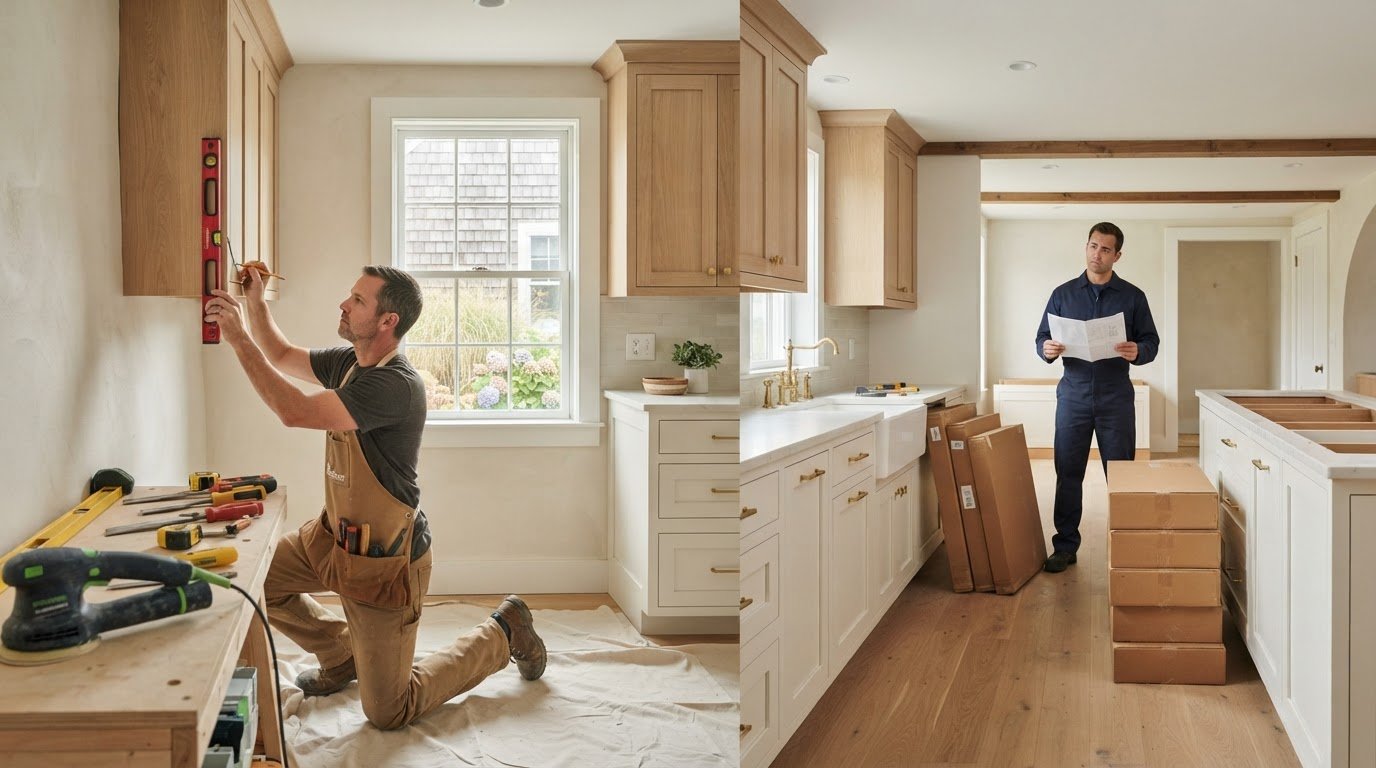
A beautiful floor is only as good as the kitchen it supports. When you’re planning your kitchen flooring installation Cape Cod project, the order of operations matters more than most people realize. Local experts generally recommend installing nailed-down hardwood before the cabinetry. This wall-to-wall approach ensures that your finished counter height remains at the standard 36 inches and prevents your dishwasher from becoming “trapped” under the counter lip. By laying the floor first, you create a level foundation for everything that follows. This sequence also allows you to choose from a wider range of affordable kitchen cabinets Cape Cod homeowners use to create their dream coastal spaces.
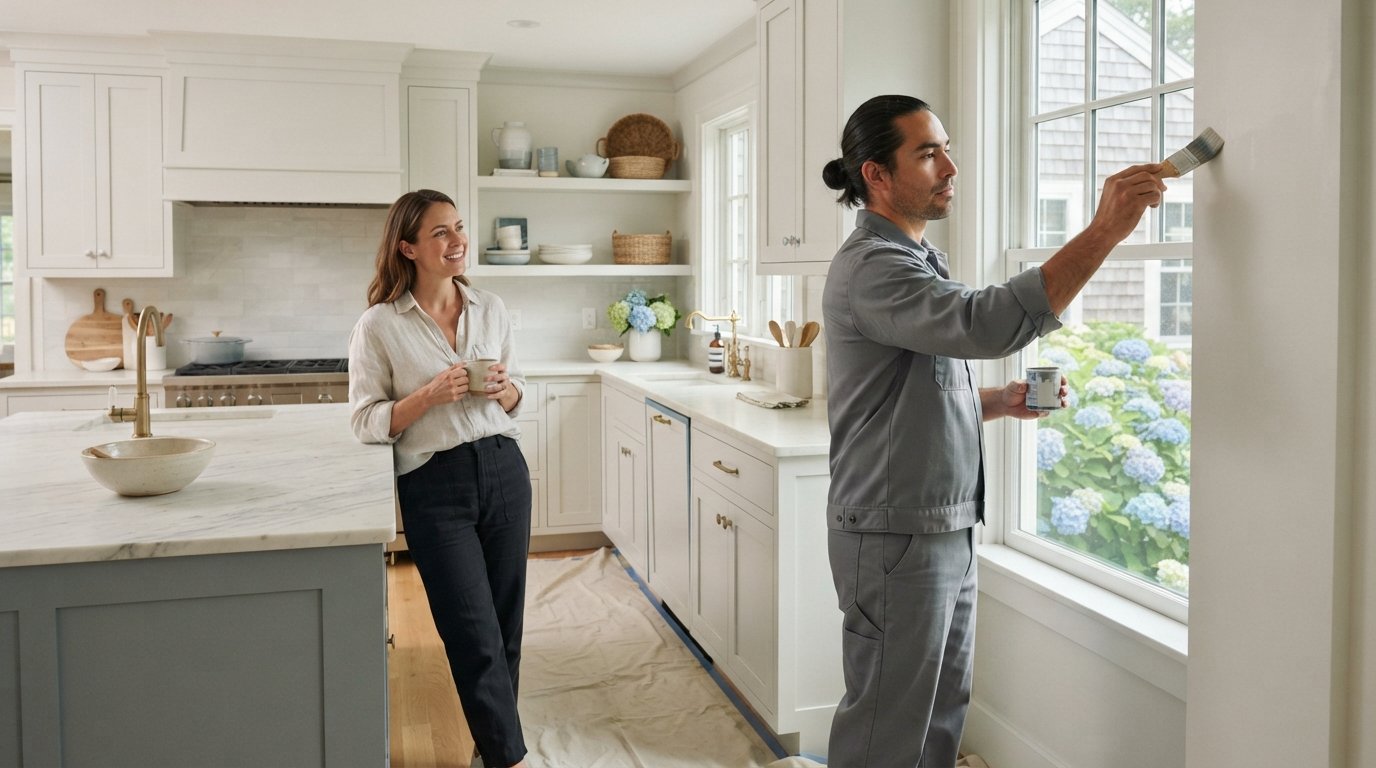
Coordinating these elements is about more than just matching colors; it’s about anchoring a cohesive design palette. Your flooring acts as the visual weight of the room. If you’ve chosen a light, airy white oak floor, you might want to ground it with a slightly deeper cabinet tone, or lean into a bright, monochromatic look. The goal is to create a sanctuary where every material feels intentional and collaborative. When you work with a team that understands both the wood under your feet and the cabinets on your walls, the entire process feels more like a shared dialogue than a series of chores. Pairing your new floors with interior painting services Cape Cod professionals recommend ensures your walls and surfaces hold up to the same coastal humidity that challenges your flooring.
Coordinating Hardwood with Shaker-Style Cabinetry
Shaker-style cabinets are a staple of the Cape Cod aesthetic because of their clean lines and timeless appeal. To achieve a balanced look, consider how the grain patterns in your wood floor interact with the recessed panels of your cabinet doors. A heavy, rustic grain might clash with the minimalist nature of Shaker doors; whereas, a more uniform grain provides a smooth visual transition. Don’t forget the details like toe kicks and transition moldings. Using the same wood species for your toe kicks as your floor can create a seamless, built-in appearance that elevates the entire room’s craftsmanship.
The Single-Contractor Advantage on Cape Cod
The logistical success of a kitchen flooring installation Cape Cod homeowners love often depends on scheduling. Hiring a single team to manage your cabinets, flooring, and painting eliminates the “finger-pointing” that can happen between different trade groups. It ensures that the person installing your floor is talking to the person measuring your cabinets. This unified approach provides consistent quality control and a smoother timeline for your kitchen finishing services Cape Cod. Whether you’re in Falmouth or Mashpee, having one point of contact means your personal vision remains the priority from the first subfloor test to the final coat of paint.
Build a Foundation That Lasts for Generations
Your kitchen is the heart of your home, and its foundation should be built to last through every shifting tide. Selecting the right materials, like engineered white oak, protects your investment against the Cape’s unique humidity and abrasive sand. A successful kitchen flooring installation Cape Cod homeowners can be proud of depends on patient acclimation and a seamless integration with your cabinetry. By treating your flooring as the first step in a holistic design, you ensure a result that is both beautiful and resilient.
Our team of locally owned Mashpee experts is here to guide you through every measurement and material choice. We provide full-service remodeling from design to final installation, serving neighbors in Falmouth, Sandwich, Barnstable, and beyond. We’d love to help you bring your personal vision to life with craftsmanship that stands the test of time. Schedule Your Free Flooring and Cabinet Consultation Today and let’s start planning a space that truly feels like home.
Frequently Asked Questions
Is hardwood flooring a good choice for a Cape Cod beach house?
Yes, hardwood remains a premier choice for Cape Cod beach houses when you prioritize moisture resilience. While traditional solid wood can struggle with salt air, engineered hardwood offers the stability needed for beachfront environments in Falmouth or Bourne. It provides a timeless coastal aesthetic that increases property value while standing up to the unique environmental pressures of the Atlantic coastline.
How long does hardwood flooring installation take?
A typical kitchen flooring installation Cape Cod project takes between five to ten days from start to finish. This timeline includes a non-negotiable acclimation period of at least three to five days to ensure the wood stabilizes to your home’s humidity. The actual laying and fastening usually take two to three days, followed by finishing. Complex layouts or custom transitions in towns like Sandwich may extend this schedule slightly.
Can I install hardwood floors over existing tile or vinyl?
We strongly recommend removing existing tile or vinyl before starting your new installation. While some floating floors can technically go over vinyl, a professional kitchen remodel requires a clean, level subfloor to prevent future squeaks and height mismatches with your cabinets. Removing old layers allows our Mashpee based team to inspect the subfloor for moisture damage, which is vital for long-term durability in our humid coastal climate.
What is the best wood species for high-humidity coastal areas?
White Oak is widely considered the best species for high-humidity areas like Hyannis or Pocasset. Its closed-cell structure makes it naturally more resistant to moisture and rot compared to Red Oak or Pine. Maple is another excellent choice due to its extreme density and hardness. These species handle the expansion and contraction cycles of the Cape’s seasons better than softer woods, ensuring your floors remain stable year-round.
Should I choose pre-finished or site-finished hardwood?
Pre-finished hardwood is often the superior choice for Cape Cod kitchens because the factory-applied aluminum oxide finishes are incredibly resistant to sand abrasion. It also allows for a faster installation since there’s no on-site sanding or drying time. However, if you want a completely seamless surface with a custom stain to match your Shaker-style cabinets, site-finished wood offers a level of personalization that pre-finished options don’t always replicate.
How do I maintain my hardwood floors to prevent sand damage?
Managing sand is the most important part of maintaining Cape Cod floors. We recommend placing high-quality mats at every entrance and using a soft-bristled broom or vacuum designed for hard surfaces daily. Avoid wet mopping with harsh chemicals, as moisture can seep into the grain. Instead, use a manufacturer-approved cleaner and a microfiber mop to gently remove salt and grit before they can scratch your professional finish.
What is the difference between solid and engineered hardwood?
Solid hardwood is a single piece of timber from top to bottom, offering the ability to be sanded many times over decades. Engineered hardwood consists of a real wood veneer bonded over cross-ply layers of high-density core material. This layered construction makes engineered wood far more stable in the fluctuating humidity of Barnstable County, as it resists the warping, cupping, and crowning that can sometimes affect solid planks.
Does hardwood flooring increase the value of my Cape Cod home?
Hardwood flooring is one of the most reliable ways to increase the resale value of your property. In the competitive real estate markets of towns like Brewster or Centerville, homes featuring high-quality hardwood often see a return on investment between 70% and 100%. Buyers view hardwood as a premium, long-lasting feature that complements a coastal lifestyle, making your home stand out while providing a sophisticated foundation for your overall interior design. For homeowners who want a waterproof, low-maintenance alternative, our guide to vinyl plank flooring Cape Cod homes can handle covers another high-value option worth considering.