How to Choose the Perfect Cabinet Colors for Your Cape Cod Home
Cabinet color is one of the most visible decisions you’ll make in a kitchen or bathroom remodel. Done right, it transforms the entire room. Done wrong, you’re looking at it every day wondering why it doesn’t feel quite right. After installing cabinets in homes across Mashpee, Centerville, Hyannis, Falmouth, Yarmouth, and the islands, we’ve seen what works — and what doesn’t — on Cape Cod. This guide gives you the practical information you need to make a confident choice.
What Cabinet Colors Work Best on Cape Cod?
Cape Cod homes have a distinct character — lots of natural light from water-facing exposures, architectural details that lean traditional, and interiors that often blend coastal casual with genuine quality. Your cabinet color should honor that.
Timeless Neutrals: Best All-Around Choice
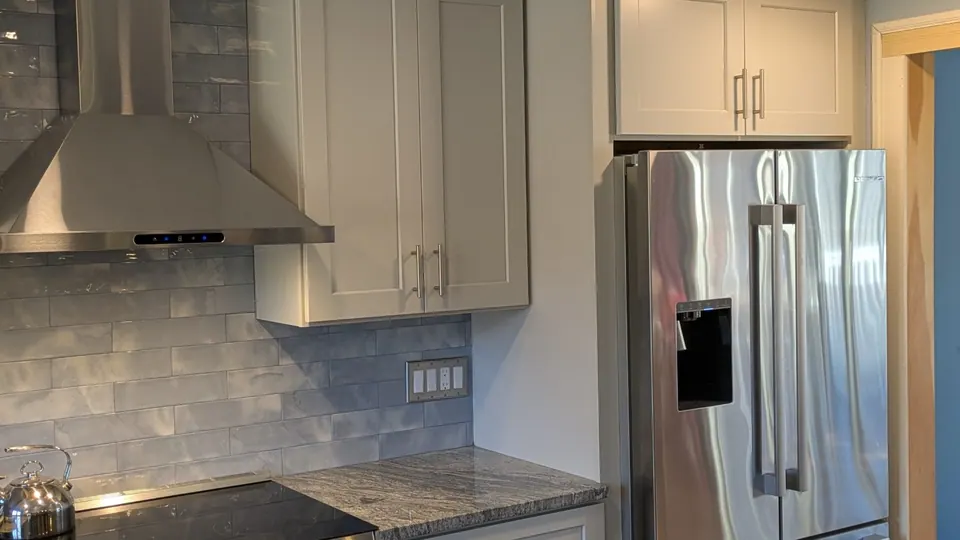
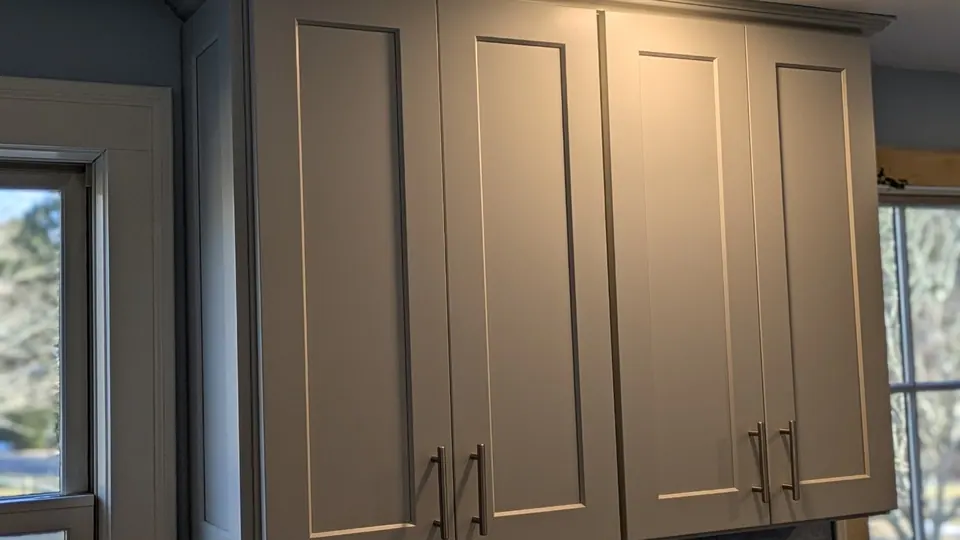
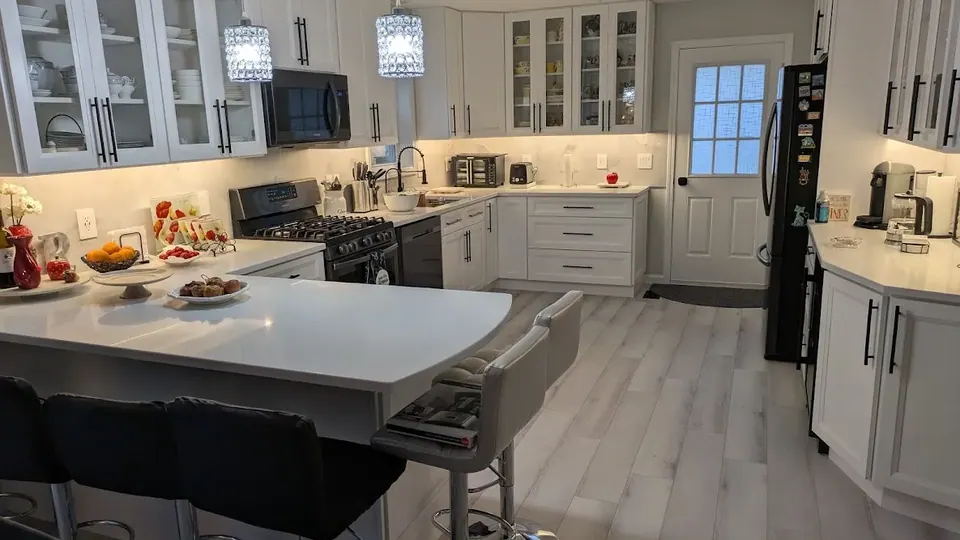
Soft whites, warm creams, and light grays remain the most universally successful choices across Cape Cod homes. They read as clean and fresh without feeling sterile, they reflect the abundant coastal light well, and they hold their value with buyers. In the high-end communities we work in regularly — New Seabury, Southport, Deer Crossing, Willow Bend — these tones dominate for good reason.
Warm Greiges and Taupes
Greige, or gray-beige, has become a workhorse shade for Cape Cod kitchens because it bridges the warm and cool worlds. It pairs naturally with the wood tones, stone counters, and brushed hardware that tend to show up in renovation-grade homes here.
Two-Tone Combinations
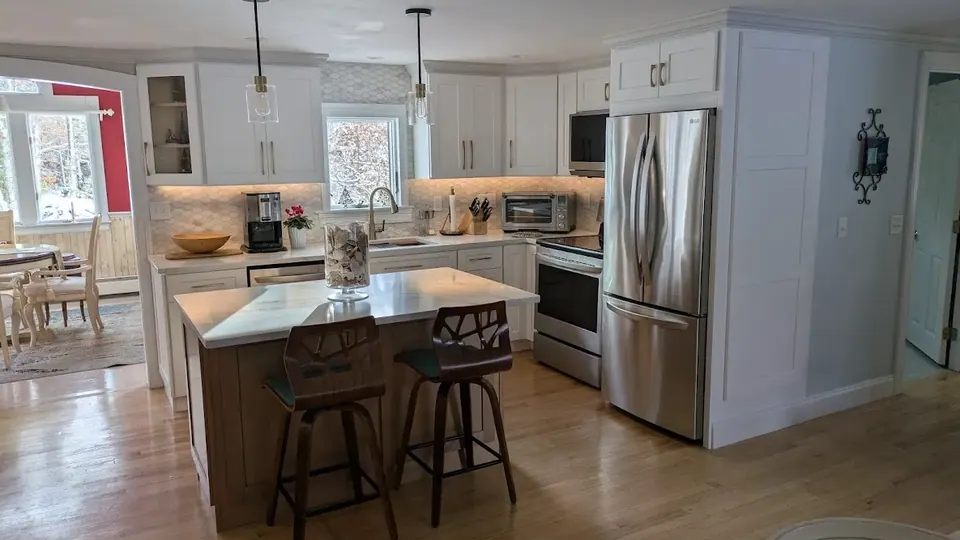
Two-tone kitchens — where upper and lower cabinets are different colors — are increasingly popular and work beautifully in Cape Cod homes with higher ceilings. A common and effective approach: white or cream uppers paired with a grounded navy, forest green, or warm gray on the lowers. This adds visual depth and gives the kitchen a custom, designed feel without a custom price tag.
Bold Accents: Navy, Forest Green, and Deep Charcoal
Used strategically, bold colors create focal points that elevate the entire room. We’ve installed deep navy lower cabinets paired with a white upper in a New Seabury home near the water — the color read beautifully against the natural light and gave a $3 million home the kitchen it deserved. The key is restraint: bold works best when it’s not everywhere.
Key Factors to Consider Before Choosing a Cabinet Color
1. How Cape Cod Light Will Read the Color
Coastal light changes dramatically throughout the day and by season. A color that looks crisp in a showroom under controlled lighting may appear washed out or muddy in your kitchen by afternoon. Before committing to anything, get a sample door and look at it in your actual space — morning, midday, and evening, under both natural light and your kitchen fixtures.
2. Room Size and Layout
Lighter colors open up smaller kitchens. Darker tones work best when you have enough square footage that they don’t close in the room. One design principle we apply in every small kitchen: don’t waste an inch. Color choices should support that — and so should every cabinet decision, including how your corners and blind spots are handled.
3. Your Countertops, Hardware, and Flooring
Your cabinet color doesn’t exist in isolation — it has to work with everything else in the room. Check undertones carefully. A cabinet that reads warm may clash with a countertop that leans cool, even if both are nominally “gray.” The most reliable approach: bring samples of your countertop and flooring to the same space and compare them together before deciding.
4. Resale Value vs. Personal Expression
Neutral cabinets photograph well, attract more buyers, and carry less risk. If you plan to sell in the next five years, lean neutral. If this is your forever home and you know what you love, go ahead and use color with confidence — just execute it well.
How Cabinet Color Interacts with Layout and Space
Here’s something most color guides skip: cabinet color and cabinet layout are connected decisions. The way your kitchen is configured — where your corners are, whether you have a blind cabinet or a full-depth island — affects how color reads in the room.
One of our standard practices is replacing the traditional lazy Susan corner with an adjustable wire basket system. Unlike a carousel, where items disappear into the back and tumble off shallow shelves, the wire basket setup gives you fully usable corner space with adjustable-height shelving — tall enough to keep things from falling, customizable to whatever you actually store there. We size it with you on site: bring the George Foreman grill, bring the tall bottles, and we set the shelf heights to work for real life. That kind of detail matters because a well-organized kitchen feels larger and more intentional — and that supports whatever color direction you choose.
Similarly, blind cabinets — those awkward corner spots you can’t reach into — don’t have to be dead space. We now modify stock cabinets to accept purpose-built pull-out inserts that make the full depth of a blind corner genuinely useful. This is the kind of upgrade that a New Seabury or Southport homeowner appreciates: it’s not just about how the kitchen looks, it’s about how it works every single day.
For a full breakdown of what to expect in terms of investment, visit our comprehensive cost comparison guide for kitchen cabinets, which covers pricing, cabinet types, and installation costs in detail.
Ready-to-Assemble Cabinets: More Color Options Than You Might Expect
One of the advantages of working with Affordable Cabinets of Cape Cod is access to 14 cabinet colors available for fast delivery — typically within three to five business days — from a warehouse less than an hour away in Norton, MA. That’s a significant difference from showroom lead times that used to run 16 to 20 weeks during the post-COVID supply crunch.
The ready-to-assemble cabinets we source are not the flat-pack furniture you’re imagining. These are factory-built units from manufacturers with the inventory depth to fulfill a complete kitchen order quickly and consistently. The color range spans from classic white and soft gray through warm wood-tone wraps to deep navy — giving you genuine design flexibility at a price point that makes sense.
See our kitchen cabinetry page for an overview of available styles and finishes.
Tips for Matching Cabinet Colors to the Rest of Your Kitchen
- Match undertones first. Warm cabinets with warm counters, cool with cool. Mixing undertones creates a subtle visual tension that bothers people without them knowing why.
- Check finish as well as color. Gloss finishes reflect light and make colors appear brighter. Matte finishes absorb light and read as deeper and more muted. Satin splits the difference and tends to hide fingerprints better — important in a working kitchen.
- Use a drawer base next to the stove. We include a large drawer base cabinet beside the range on nearly every kitchen we design. Pots and pans belong next to where you cook — not across the room. It’s a simple feature that makes daily use dramatically better.
- Don’t skip the sample test. Get a door sample in your color choice and live with it for a few days. Look at it in morning light, afternoon light, and at night under your fixtures. You’ll know.
- Consider what’s going up top. If you’re keeping existing counters, flooring, or appliances, bring those into the color conversation. A cabinet that clashes with your backsplash tile or your stainless appliances is a problem that’s expensive to fix later.
Frequently Asked Questions
What are the best cabinet colors for small kitchens on Cape Cod?
Light finishes — soft whites, pale grays, or warm creams — help small kitchens read as larger and more open. Reserve darker tones for an island or lower cabinets if you want contrast, but keep the uppers light to preserve ceiling height visually.
How do I pick cabinet colors that won’t look dated?
Stick with colors that have been working for 20 or more years: soft whites, warm grays, and greige tones. These are your lowest-risk choices. If you want to introduce personality, do it through hardware, a bold island color, or an accent backsplash — elements that are easier and cheaper to change later.
Can I use bold colors in a Cape Cod kitchen?
Yes — strategically. Deep navy, forest green, and charcoal work well on lower cabinets or kitchen islands, paired with lighter uppers. We’ve installed bold lower cabinets in high-end homes in New Seabury and Southport with great results. The key is balance: bold below, light above, and finish the look with the right hardware.
Does cabinet finish — gloss vs. matte — change how the color looks?
Significantly. Gloss amplifies color and reflects light, making a shade appear brighter. Matte absorbs light and reads as softer and deeper. For most Cape Cod kitchens, a satin or semi-gloss finish is the most practical choice: it holds up to daily use, cleans easily, and doesn’t exaggerate color the way full gloss can.
How do I make sure my cabinet color works with my countertops?
Bring both samples into your kitchen and look at them together — not in a showroom under controlled lighting, but in your actual space at different times of day. Match undertones, warm to warm and cool to cool, and use contrast intentionally rather than by accident. If your countertop is busy, a calmer cabinet color helps the room settle; if your countertop is simple, a slightly more expressive cabinet color can anchor the design.
What cabinet colors work best in bathrooms?
Bathrooms typically benefit from light, clean tones — whites, soft blues, warm grays — that feel fresh and open. Dark tones can work in larger bathrooms with good lighting but tend to make smaller spaces feel tight. Because bathroom cabinets see moisture regularly, finish quality matters as much as color selection.