Choosing Moisture Resistant Bathroom Cabinets Cape Cod: A 2026 Buying Guide
On Cape Cod, the same salt air that makes our coastline so iconic is a relentless enemy to your bathroom furniture. You’ve probably noticed how the “Cape Cod damp” lingers long after the summer crowds have left, often leaving behind warped doors and peeling finishes on standard vanities. It’s a common frustration to see a brand new renovation lose its luster because the materials simply weren’t built to handle our unique coastal humidity.
Finding the right moisture resistant bathroom cabinets Cape Cod homes require doesn’t have to be a guessing game. You deserve a space that looks as fresh in ten years as it does on installation day, without the constant worry of swelling wood or failing hardware. In this 2026 buying guide, we’ll walk you through the essential materials and sealed finishes that actually stand up to the elements. We’ll explore the smart balance between durability and cost, helping you decide between plywood cores and modern RTA options so you can build a beautiful bathroom that’s truly engineered for life on the coast.
Understanding Moisture Resistance in Cape Cod’s Coastal Environment
It’s a common mistake to assume that “moisture resistant” means the same thing as “waterproof.” In the context of cabinetry, a waterproof item could theoretically be submerged without damage. For homeowners in our area, what we really need are moisture resistant bathroom cabinets Cape Cod homes can rely on to handle atmospheric changes. This resistance refers to a cabinet’s ability to repel steam and slow down the natural expansion of wood fibers when the air gets heavy. Standard cabinets often fail here because they’re built for drier, inland climates where the air doesn’t carry a constant load of salt and water.
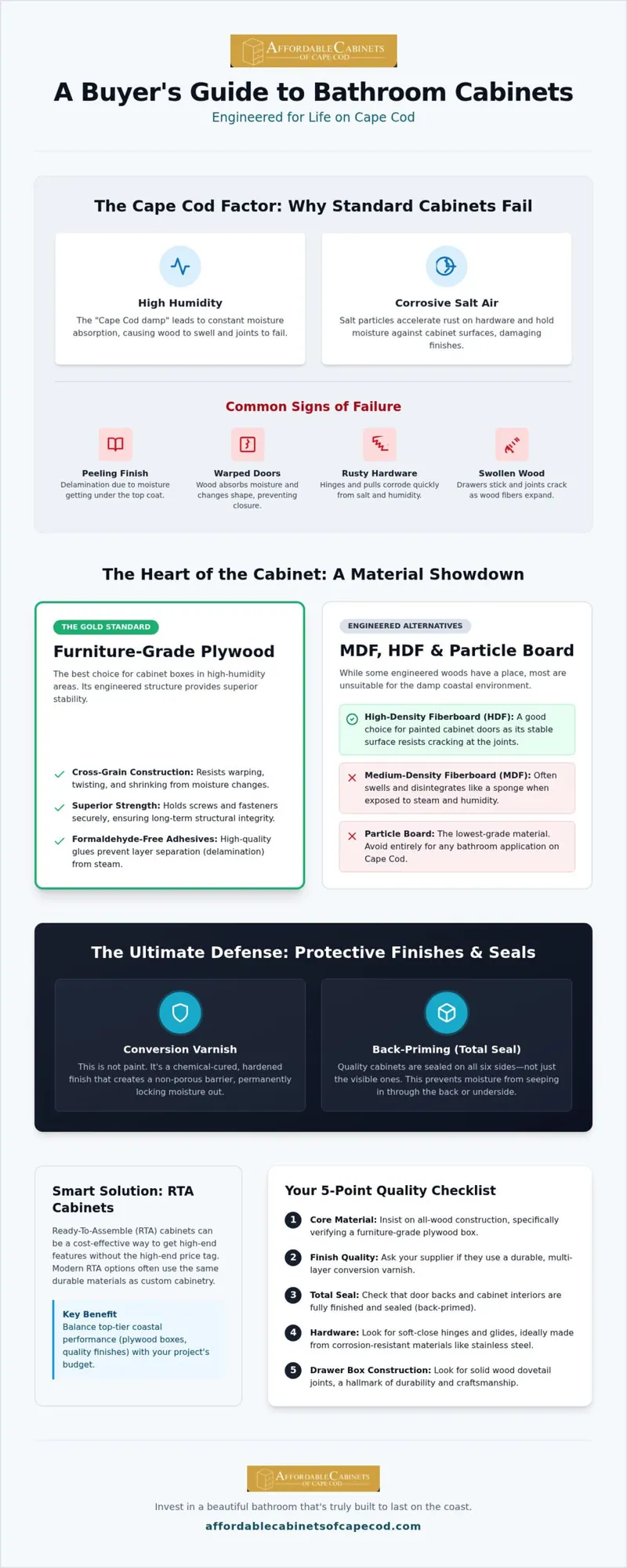
The “Cape Cod Factor” is a unique combination of high relative humidity and corrosive salt air. You’ll recognize the signs of failure quickly if your vanity isn’t up to the task. Delamination is the most common symptom, where the finish begins to peel away from the cabinet box like old wallpaper. You might also notice your hinges turning a dull orange from corrosion or cabinet doors that suddenly won’t close flush because the wood has swollen. These aren’t just cosmetic issues; they’re signs that the structural integrity of your vanity is breaking down.
The Science of Coastal Humidity and Wood
Wood is a hygroscopic material, meaning it acts like a sponge by absorbing and releasing moisture to match its environment. In coastal homes, the equilibrium moisture content is the balance point where wood fibers neither gain nor lose moisture from the surrounding salt-heavy air, often staying significantly higher than in drier inland climates. This constant state of “fullness” puts stress on joints and finishes. Salt particles exacerbate the problem by acting as tiny magnets for water. When salt settles on a surface, it pulls even more moisture out of the air and holds it against the cabinet, which is why standard Medium-density fibreboard (MDF) frequently fails in our local bathrooms.
Why Your Bathroom Needs Specialized Cabinetry
While a kitchen deals with occasional splashes, a bathroom faces a much more aggressive moisture load in the form of concentrated steam. This is especially true in older Cape Cod cottages where ventilation might not meet the modern standard of 50 cubic feet per minute (CFM). If your bathroom lacks a powerful exhaust fan, that steam lingers on every surface. Choosing moisture resistant bathroom cabinets Cape Cod experts recommend is an investment in long-term ROI. It’s far more cost-effective to install high-quality, coastal-ready materials now than to pay for a second remodel in five years because your first vanity couldn’t handle the damp.
Material Science: Plywood vs. MDF for High-Humidity Bathrooms
The core material of your vanity dictates whether it will survive the next decade or swell within three seasons. While many associate “solid wood” with luxury, it isn’t always the most stable choice for a damp Cape Cod bathroom. Solid wood planks expand and contract significantly across the grain; this movement can lead to cracked joints and sticking drawers during the humid summer months. For the cabinet box itself, furniture-grade plywood has become the industry standard for moisture resistant bathroom cabinets Cape Cod homeowners trust for long-term durability.
Plywood: The Coastal Gold Standard
Plywood is engineered by gluing thin layers of wood in alternating directions. This cross-grain construction creates a structural stability that solid wood simply can’t match. It resists warping and twisting even when the humidity spikes during a foggy August afternoon. When you’re browsing our selection of bathroom vanities, look for “all-wood construction,” which typically indicates a plywood box rather than a particle board one. It’s also vital to ensure the manufacturer uses formaldehyde-free adhesives. In tight, humid bathroom spaces, these high-quality glues prevent off-gassing and ensure the layers don’t separate even after years of exposure to steam from your morning shower.
Engineered Solutions: When to Use MDF or HDF
There’s a common myth that all engineered wood is low-quality. In reality, modern high-density fiberboard (HDF) is often superior to solid wood for painted Shaker-style doors. Because HDF is a single, dense piece of material, it doesn’t have the expansion points found in traditional five-piece wood joints. This means your white or grey painted finish won’t develop those unsightly hairline cracks at the corners as the seasons change. However, you should avoid standard particle board entirely in a Cape Cod bathroom. Unlike HMR (High Moisture Resistant) options, basic particle board lacks the resin density to stop water from wicking into the core. This leads to the “bloating” effect often seen in budget vanities where the edges begin to crumble and swell. If you’re unsure which material fits your home best, our team can help you weigh the options at affordablecabinetsofcapecod.com during your design phase.
Choosing the right material is about more than just the price tag; it’s about matching the material science to our local climate. By selecting a plywood box paired with HDF or solid wood doors, you create a system that handles the “Cape Cod damp” without sacrificing the high-end look you want for your master suite. This combination ensures your moisture resistant bathroom cabinets Cape Cod project remains a source of pride rather than a maintenance headache.
Evaluating Protective Finishes and Hardware for Salt Air Durability
A cabinet’s core material provides the structural foundation, but the finish acts as the primary shield against our local elements. On the Cape, a standard paint job or simple lacquer often isn’t enough to stop the slow creep of humidity. You need a finish that creates a true chemical seal, preventing moisture from ever reaching the wood fibers. This is where conversion varnish becomes the essential standard for moisture resistant bathroom cabinets Cape Cod homeowners can trust for long-term performance.
Conversion Varnish vs. Traditional Paint
Conversion varnish is a post-catalyzed finish that’s significantly more durable than the standard latex or oil-based paints found on big-box store vanities. This finish relies on a chemical cross-linking process where a catalyst triggers a molecular bond, creating a hard, impenetrable plastic-like shield that moisture cannot penetrate. Unlike traditional paint, which can remain slightly porous, this varnish resists the “checking” or hairline cracking that occurs when steam repeatedly hits a cold cabinet surface.
To ensure total protection, it’s vital to seal all six sides of every door and drawer front. This process, often called back-priming, ensures that moisture can’t sneak in through the rear of the panel where it’s hidden from view. Without this 360-degree seal, the back of the door can absorb humidity, leading to the warping issues we discussed earlier. To keep this finish intact, we recommend avoiding harsh chemical cleaners; a simple wipe with a damp cloth is usually all it takes to keep the salt from sitting on the surface.
Selecting Salt-Resistant Hardware
Your hardware choice is just as critical as the wood itself. In our salt-heavy air, cheap zinc or low-grade steel hinges will pit and corrode surprisingly fast. This corrosion doesn’t just ruin the aesthetic; it can seize the moving parts of your soft-close hinges and drawer glides, leading to sticking or squeaking. When selecting your pulls and hinges, look for materials that can handle the “Cape Cod damp” without failing.
- Stainless Steel or PVD Finishes: Physical Vapor Deposition (PVD) creates a finish that’s virtually immune to salt-air pitting and scratching.
- Brushed Nickel and Chrome: These remain popular coastal choices for their natural resistance to tarnishing in humid master suites.
- High-Quality Internal Glides: Ensure your drawer glides are rated for high-use, damp environments to prevent the internal bearings from rusting or becoming gummy.
High-quality hinges also play a role in the longevity of your vanity by allowing for precise door alignment. Even with stable materials, the slight shifts in seasonal humidity mean your cabinets need hardware that can be micro-adjusted. By pairing a robust conversion varnish with salt-resistant hardware, you create a complete system that protects your moisture resistant bathroom cabinets Cape Cod investment from the inside out. For those looking to browse a wide variety of these specialized components, you can find out more about Kitchen and Bathroom Product Retail and Installation to see how professional-grade hardware and cabinetry are integrated into coastal designs.
When you’re ready to invest in moisture resistant bathroom cabinets Cape Cod homeowners often feel overwhelmed by the sheer number of options available. It’s not just about picking a color that matches your tile; it’s about verifying the technical specs that ensure your vanity survives our local climate. If you’re walking through a showroom or browsing online, use this 5-point checklist to evaluate quality:
- The Box Test: Confirm the cabinet box is made of furniture-grade plywood rather than particle board.
- The 6-Side Seal: Run your hand along the back and bottom edges of the doors to ensure the finish is applied to every surface.
- Hardware Material: Ask if the hinges are stainless steel or have a PVD coating to resist salt-air pitting.
- Joint Construction: Look for dovetail drawer boxes, which provide the structural strength needed when wood naturally breathes.
- Glide Rating: Ensure soft-close mechanisms are rated for high-humidity environments to prevent internal rusting.
You don’t have to sacrifice your aesthetic for durability. Many of the most popular Shaker style cabinets Cape Cod residents love are now built with HDF doors and plywood boxes, offering that timeless coastal look with modern moisture protection. Also, consider the practical layout of your vanity. Choosing a model with a recessed toe kick or a slightly higher profile can prevent water from sitting against the base of the cabinet if the floor gets wet after a bath or shower. If you’re also updating a powder room, understanding the half bath remodel cost Cape Cod homeowners are facing in 2026 can help you budget for moisture-resistant materials across every bathroom in your home.
RTA vs. Custom: Which is Better for Moisture?
There’s a common misconception that custom cabinetry is the only way to get coastal durability. In reality, high-quality RTA cabinets are often the “smart choice” for Cape bathrooms. These units are manufactured in controlled environments with precision-applied conversion varnishes that are difficult to replicate in a local shop. The key is in the assembly. When we install RTA units, we ensure every joint is properly seated and sealed, providing a level of moisture resistance that rivals custom builds at a much more accessible price point. Custom work remains a great option if you’re dealing with the non-standard footprints often found in historic Cape cottages.
Sizing and Layout for Ventilation
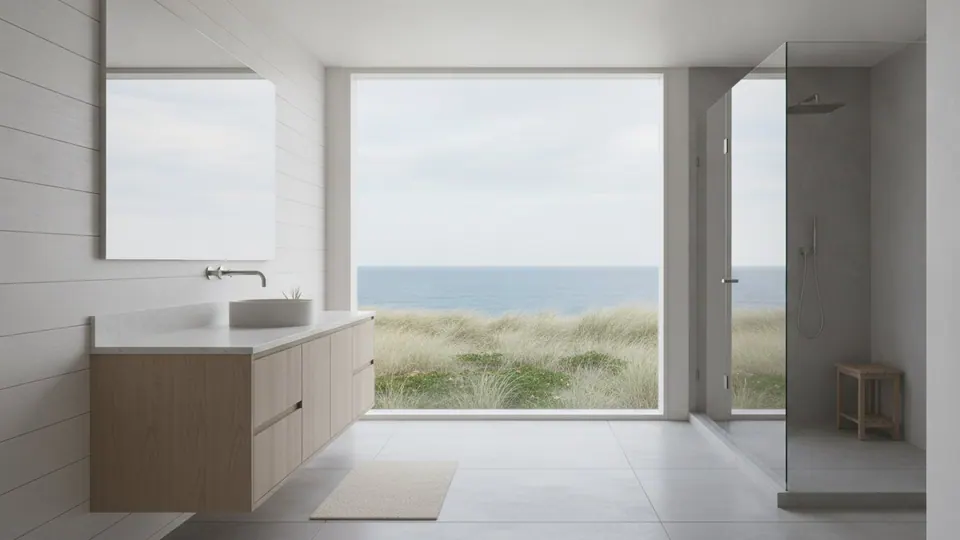
Airflow is your best defense against mold and wood rot. In 2026, we’re seeing a strong trend toward “floating” or wall-mounted vanities. These designs leave the floor clear, allowing air to circulate completely around the cabinet. This prevents “dead air” pockets where moisture can become trapped against the wall or floor. If you prefer a traditional floor-standing model, ensure there’s a small clearance between the vanity and side walls. Consulting with bathroom design ideas Cape Cod experts can help you optimize your layout for both beauty and ventilation. Our team can help you select moisture resistant bathroom cabinets Cape Cod residents have trusted for years to stay beautiful in the face of Atlantic storms. If you’re ready to start your project, visit us at affordablecabinetsofcapecod.com to see our coastal-ready collections.
Professional Bathroom Remodeling Solutions with Affordable Cabinets of Cape Cod
At Affordable Cabinets of Cape Cod, we don’t just sell furniture; we provide engineered solutions for our unique coastal environment. We source moisture resistant bathroom cabinets Cape Cod families can rely on because we live and work in the same humidity you do. Our team understands that a beautiful vanity is only as good as its installation. That’s why we prioritize our professional measurement and design service. Many older Cape homes have settled over the decades, creating uneven walls and tight footprints. If there’s even a small gap between your cabinet and the wall, it becomes a hidden pocket for the “Cape Cod damp” to settle and cause mold. We ensure a perfect, flush fit that eliminates these moisture traps from the start.
Our approach is holistic. A bathroom renovation often involves more than just a new vanity. We can seamlessly integrate your cabinet choice with flooring installation Cape Cod homeowners trust for durability. By managing both the cabinetry and the flooring, we ensure the transitions are watertight and the aesthetic is unified. We also offer interior painting to finish the space with moisture-ready coatings that complement your new Shaker-style or RTA cabinets. This end-to-end project management ensures you aren’t juggling multiple contractors or worrying about technical oversights. Before you begin, reviewing our ultimate checklist for hiring bathroom renovation contractors on Cape Cod can help you ask the right questions and ensure your chosen team is truly qualified for a coastal bathroom remodel Yarmouth MA homeowners can be proud of.
Local Expertise in Coastal Remodeling
We’ve spent years serving homeowners from Mashpee to Dennis, helping them navigate the challenges of coastal living. National big-box stores often stock products designed for a generic, dry climate. They don’t account for the salt air that drifts off the Sound or the high relative humidity that defines our summers. Our local expertise means we’ve seen what works and what fails in real-world conditions. You can see the results of this specialized knowledge in our recent master bathroom remodel Barnstable projects, where we successfully balanced high-end design with rugged moisture resistance.
Start Your Moisture-Resistant Remodel Today
The best way to feel the difference in quality is to see it for yourself. We invite you to visit our Mashpee showroom for a hands-on comparison of our cabinet materials and finishes. You can touch the conversion varnish and see the “all-wood” construction of our RTA lines in person. Our collaborative process is designed to be stress-free. We act as your skilled guide, handling everything from the initial design to the final installation. We value your vision and work alongside you to ensure the final result is both beautiful and functional. If you’re ready to protect your home with moisture resistant bathroom cabinets Cape Cod experts recommend, we’re here to help. Schedule your professional design consultation today and let’s build something that lasts.
Secure Your Coastal Investment for the Long Term
Designing a bathroom on the Cape requires a shift from standard aesthetics to climate-driven engineering. We’ve explored how furniture-grade plywood boxes and high-density fiberboard doors create the structural stability needed for our humid environment. By prioritizing conversion varnish finishes and salt-resistant hardware, you ensure your vanity survives the “Cape Cod damp” without the heartbreak of peeling or warping. These technical choices are the difference between a vanity that lasts three seasons and one that remains beautiful for decades.
At Affordable Cabinets of Cape Cod, we bring years of local expertise and A+ rated craftsmanship to every project. We specialize in moisture resistant bathroom cabinets Cape Cod homeowners can depend on, offering a wide selection of moisture-ready Shaker and RTA options tailored to our coastal needs. Our team is ready to help you navigate the technical details of coastal remodeling, from professional measurements to expert installation. We take pride in being your neighborly guide through the transformation of your home.
Ready to transform your master suite into a durable coastal sanctuary? Request Your Custom Bathroom Design and Measurement Quote today. We look forward to partnering with you to create a space that stands the test of time and tide.
Frequently Asked Questions
What is the best material for bathroom cabinets in high-humidity areas?
Furniture-grade plywood is the most reliable material for cabinet boxes in high-humidity areas like Mashpee or Falmouth. It resists warping better than solid wood because its layered construction limits natural expansion. For doors, high-density fiberboard (HDF) is often preferred for painted finishes since it doesn’t have the joint movement that causes cracking. Always look for “all-wood” construction to ensure your investment handles the steam and seasonal humidity swings common in our coastal homes.
Is MDF better than plywood for moisture resistance?
Plywood is generally superior for cabinet boxes due to its structural strength and resistance to swelling. However, HMR (High Moisture Resistant) MDF or HDF is often better for painted door panels in towns like Bourne or Sandwich. These engineered materials don’t expand and contract like solid wood, which prevents the paint from cracking at the joints. For the best moisture resistant bathroom cabinets Cape Cod homeowners should look for a plywood box paired with HDF doors.
Can I use RTA cabinets in a bathroom with a shower?
You can absolutely use high-quality Ready-To-Assemble (RTA) cabinets in bathrooms with showers, provided they feature plywood boxes and sealed finishes. Many RTA lines we offer are specifically engineered for durability. The key is ensuring professional assembly and installation so that every joint is tight and no raw wood is exposed to steam. In coastal areas like Hyannis or Centerville, these cabinets provide a smart, durable alternative to expensive custom builds without sacrificing performance.
How do I protect my bathroom cabinets from salt air corrosion?
Protecting your vanity from salt air requires a combination of high-quality finishes and non-corrosive hardware. Look for cabinets treated with a post-catalyzed conversion varnish, which creates a chemical moisture barrier. For hinges and pulls, choose stainless steel or PVD finishes that won’t pit or rust when exposed to the Atlantic air. Regularly wiping down surfaces in your Yarmouth or Dennis home helps remove salt deposits before they can degrade the protective topcoat of your cabinetry.
Do I need a special finish on my cabinets if I have a good exhaust fan?
Even with a high-performance exhaust fan meeting Massachusetts building codes, a specialized moisture-resistant finish is essential. Fans remove airborne steam, but they don’t prevent the immediate contact of water droplets or the ambient “Cape damp” that lingers in towns like Brewster. A conversion varnish provides a permanent seal that prevents wood fibers from absorbing moisture during those foggy summer weeks. This extra layer of protection is what keeps your bathroom vanity looking brand new for over a decade.
Will Shaker style cabinet doors warp more easily in the humidity?
Shaker style cabinet doors are a coastal favorite, but their five-piece construction can be vulnerable if made entirely of solid wood. In humid areas like Marstons Mills, the joints where the stiles and rails meet can expand, causing the paint to crack. To prevent this, we recommend Shaker doors with HDF center panels or full HDF construction for painted styles. This ensures your timeless aesthetic remains intact without the risk of warping or unsightly structural gaps.
How long do moisture-resistant cabinets typically last on Cape Cod?
High-quality, moisture-resistant cabinets can easily last 15 years or more on the Cape if they are properly installed and maintained. In contrast, builder-grade particle board vanities often show signs of swelling or peeling within just three to five years. By choosing materials designed for our local climate, such as those we install in Barnstable or Pocasset, you’re making a long-term investment. Professional installation ensures that gaps are sealed, further extending the lifespan of your bathroom cabinetry.
What is the difference between water-resistant and waterproof cabinetry?
Water-resistant cabinets are designed to repel steam and occasional splashes, which is the standard for moisture resistant bathroom cabinets Cape Cod projects. Waterproof cabinetry is typically made of PVC or stainless steel and can be fully submerged, making it more common for outdoor kitchens. For an indoor master bath in Cataumet or Sandwich, a high-quality water-resistant wood cabinet with a conversion varnish offers the perfect balance of warmth, beauty, and durability against daily humidity.