Durable Bathroom Cabinets on Cape Cod: How to Choose for Coastal Conditions
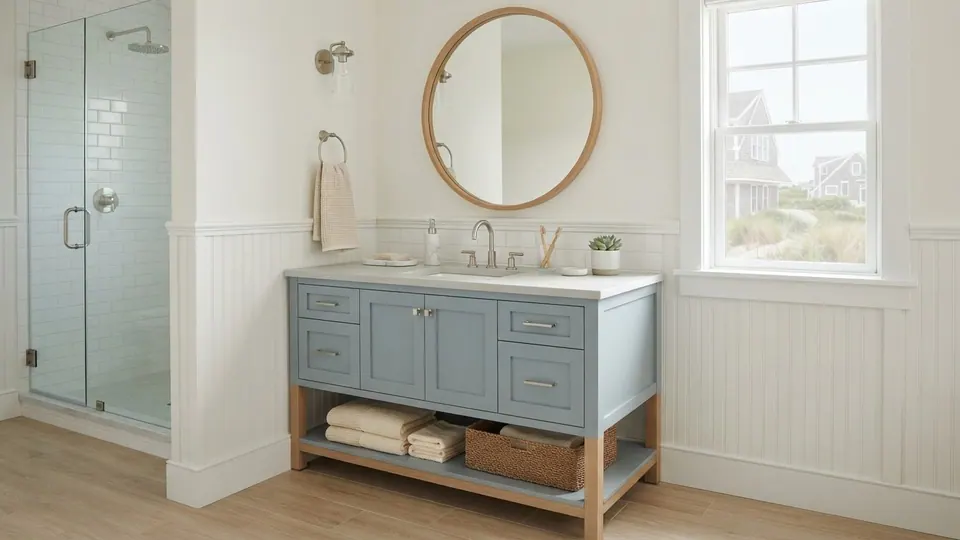
The vanity that looks perfect in a showroom may not be the right fit for a Cape Cod bathroom. Humidity, limited ventilation, and daily use can all affect how cabinets hold up. Choosing durable bathroom cabinets Cape Cod homeowners can rely on means looking beyond appearance to construction, finish, fit, and care.
You can choose cabinetry that suits your style and routine while accounting for the room’s conditions. Material labels and construction descriptions can be hard to compare, and a stylish choice is not automatically a practical one for a busy household.
This guide explains what to check when comparing cabinet options, planning storage, and assessing moisture exposure. It also covers measurements and installation considerations that can help you make a more confident choice as part of a bathroom renovation.
What Makes Bathroom Cabinets Durable in a Cape Cod Home?
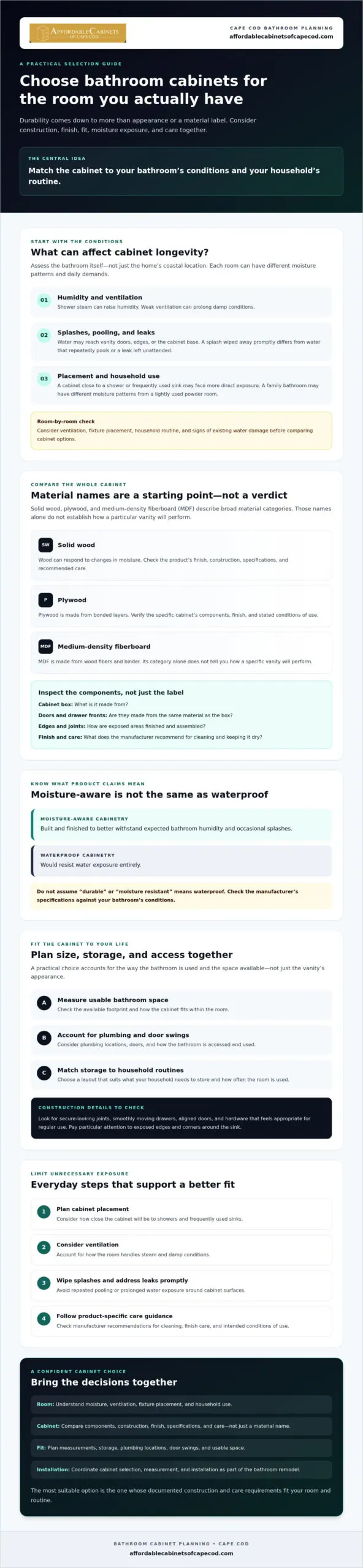
You shouldn’t have to choose between a bathroom vanity that suits your home and one that can handle everyday use. For durable bathroom cabinets Cape Cod homeowners should consider more than appearance or a material label. Longevity depends on construction and finish, how well the cabinet fits the space, its exposure to moisture, and how it’s cared for.
Moisture-aware cabinetry is built and finished to better withstand expected bathroom humidity and occasional splashes. Waterproof cabinetry would resist water exposure entirely. Don’t assume a cabinet is waterproof because a product description calls it durable or moisture resistant. Check the manufacturer’s specifications and consider the conditions in your bathroom.
How bathroom moisture affects cabinet longevity
Shower steam can raise humidity, and splashes can reach vanity doors, edges, and the cabinet base. Repeated exposure may affect finishes, seams, or wood-based components over time. A splash wiped away promptly is different from water that repeatedly pools beside the sink or reaches a cabinet near the shower.
Leaks and weak ventilation can prolong damp conditions. Layout matters, too: a cabinet close to a shower or frequently used sink may face more direct exposure than one farther from fixtures in a well-ventilated area.
Why Cape Cod homeowners should assess each room individually
Cape Cod’s coastal setting is useful context, but it doesn’t tell you exactly how damp a particular bathroom gets. Ventilation, fixture placement, household routines, and signs of existing water damage all affect the conditions cabinets will face. A family bathroom used by several people may have different moisture patterns from a lightly used powder room.
Before choosing a cabinet, check its specifications for materials, finish, and care. Look closely at edges and joints, where water may collect, and ask what maintenance the manufacturer recommends. For wood surfaces, wood finishing techniques include processes and materials intended to protect against wear and exposure, but the suitability of a particular finish depends on the product.
A room-by-room assessment helps you compare cabinets against actual conditions instead of a broad durability label. If you’re planning a bathroom remodel, consider cabinet placement, ventilation, and daily use together so the finished space works for your style and routine.
Which Bathroom Cabinet Materials and Construction Details Deserve a Closer Look?
A material name is a starting point, not a durability verdict. Solid wood, plywood, and medium-density fiberboard (MDF) are broad categories. Cabinets in each category can differ in how their parts are assembled, sealed, and finished. When comparing durable bathroom cabinets Cape Cod homeowners should consider the whole cabinet and its care requirements, not rely on one label.
Wood can respond to changes in moisture, and the USDA Forest Service’s Wood Handbook offers background on wood properties. Plywood is made from bonded layers, while MDF is made from wood fibers and binder. Those descriptions alone don’t establish how a particular vanity will perform in your bathroom. Verify product-specific moisture-resistance or durability statements in the manufacturer’s specifications.
How to read cabinet material and finish descriptions
Ask what each component is made from. The cabinet box, doors, drawer fronts, and exposed edges may use different materials, so a general phrase such as “wood cabinet” may not tell the whole story. Ask what finish is applied and how the manufacturer recommends cleaning and caring for it. Finishes and edge treatments vary, and the right option depends on the product and its exposure.
Use these questions when reviewing options:
- Material description: What are the box, fronts, and edges made from?
- Care guidance: How should the finish be cleaned and kept dry?
- Supplier questions: Which specifications describe the cabinet’s intended conditions of use?
There’s no universally best material for every bathroom. Compare documented construction and care guidance with your room’s ventilation, fixture placement, and routine.
What construction details can affect everyday durability?
Look beyond the surface. Check whether joints appear secure, drawers move smoothly, doors align, and hardware feels appropriate for regular use. Inspect exposed edges and corners, particularly around the sink, where splashes may occur. The vanity’s shape and placement can also affect how directly water reaches cabinet surfaces or plumbing openings.
Appearance can’t confirm what’s inside or how a finish will respond to moisture. Review the manufacturer’s documentation and ask the supplier to explain unfamiliar descriptions. If you’re weighing bathroom vanities as part of a larger project, you can discuss cabinet and vanity options alongside your bathroom’s measurements and storage needs.
How Do You Compare Durable Bathroom Cabinets for Your Cape Cod Bathroom?
Start with how the bathroom works, not with a cabinet photo you like. Note who uses the room, what needs to be stored, how much floor and wall space is available, and what level of upkeep fits your routine. These details help you compare durable bathroom cabinets Cape Cod homes can accommodate without giving up everyday convenience.
Measure the available vanity area and note the sink and plumbing locations, nearby doors, and the space needed for drawers and cabinet doors to open. Check clearances around the vanity, too. A wider cabinet may offer more storage, but it won’t be practical if it blocks a doorway or makes movement awkward. Confirm dimensions against the room before choosing a configuration.
Which cabinet style and configuration fit your household?
Think about what household members reach for most. Drawers can make smaller items easier to sort, while cabinet doors may suit taller supplies. If several people share the bathroom, consider the sink and vanity configuration only after checking measurements and plumbing placement. Shaker-style cabinets offer a distinct design, but style alone doesn’t guarantee durability. Assess construction, finish care, and fit separately.
Appearance and performance are different considerations. Finish choice affects the look, while the manufacturer’s care instructions explain how to maintain it. For background on how wood finishes are used, consult USDA research on finishing wood, then check the selected cabinet’s specifications rather than assuming a general description applies.
What should you ask before selecting a vanity or RTA cabinet?
Before deciding, clarify what comes with the vanity or ready-to-assemble (RTA) cabinet and what the project requires. Ask for product dimensions and manufacturer documentation, then review the finish-care instructions. Confirm the assembly requirements and who is responsible for measurement, assembly, and installation for that option. Don’t assume these steps are included just because a cabinet is described as ready to assemble.
- Will the cabinet fit the measured space and work with the existing plumbing locations?
- Can doors and drawers open without hitting walls, fixtures, or one another?
- What care does the manufacturer recommend for the finish?
- Which project steps are handled by the supplier, installer, or homeowner?
Once you’ve set these practical criteria, explore bathroom design ideas for inspiration while keeping your room’s dimensions and routine in view. Affordable Cabinets of Cape Cod offers bathroom vanities, RTA cabinets, and cabinet installation. You can discuss bathroom cabinet options as part of planning a coordinated remodel.
How Can You Protect Bathroom Cabinets From Moisture and Wear?
Good cabinet care starts before installation and continues through everyday use. Check ventilation, plan cabinet placement, confirm the fit, install carefully, and follow the manufacturer’s care instructions. These steps can reduce avoidable exposure, but they can’t make a cabinet suitable for conditions its construction wasn’t designed to handle.
Routine moisture control complements suitable cabinet construction, but it can’t replace it. Even durable bathroom cabinets Cape Cod homeowners select need care that matches the product and the room.
What can you do before and after installation?
Before work begins, consider how air moves through the bathroom and where sink or shower splashes could reach cabinet surfaces. Check measurements and look at the surrounding floor and walls for signs of damage or dampness. Careful measurement and installation can help avoid fit and alignment problems.
After installation, wipe spills promptly, especially around the sink and cabinet base. Follow the manufacturer’s cleaning and care guidance instead of choosing a cleaner or treatment based on general advice. If water repeatedly collects in one spot, look for the source and address it rather than relying on frequent wiping alone.
When should a cabinet or bathroom professional assess the room?
Recurring leaks, visible swelling, loose finishes, or persistent dampness are reasons to assess the conditions before replacing cabinetry. A new cabinet won’t resolve an underlying water or ventilation concern. The source may need attention from an appropriate professional before new cabinets are installed, so the same exposure doesn’t continue.
Installation deserves careful thought if the room has uneven surfaces, tight clearances, or existing cabinetry that doesn’t sit squarely. For practical guidance on weighing the task, review the published DIY versus professional cabinet installation article. If installation is part of your bathroom project, clarify who will measure, prepare the space, and fit the cabinets, and what work is included.
Affordable Cabinets of Cape Cod offers bathroom remodeling and cabinet installation. You can discuss your bathroom cabinet installation and how it fits into your renovation plans.
How Can a Cape Cod Remodeling Team Help You Choose and Install Bathroom Cabinets?
A vanity is easier to choose when it’s part of a coordinated bathroom plan. Measurements, plumbing locations, storage needs, cabinet selection, and installation all affect how the finished room functions. For homeowners comparing durable bathroom cabinets Cape Cod options, considering these decisions together can reveal fit issues before installation.
Affordable Cabinets of Cape Cod offers bathroom remodeling, bathroom vanities, and cabinet installation. The team can discuss your room, preferred cabinet style, and storage priorities as part of project planning. Ask about available cabinet options, and confirm construction, care instructions, and any moisture-related claims in the manufacturer’s documentation.
What to prepare for a bathroom cabinet consultation
Bring room measurements or photos if you have them. They can help start the conversation, but professional measurement may still be needed before selecting or fitting a cabinet. Note sink and plumbing locations, door swings, and where household members need convenient storage.
- List the items you want to store and how you use the bathroom each day.
- Share your preferred style, such as Shaker-style cabinetry, and any finish-care preferences.
- Point out concerns about ventilation, splashes, leaks, or existing water damage.
- Ask which vanity and cabinet options, measurement support, and installation services are available for your project.
Whether you’re planning a project in Mashpee, Bourne, Cataumet, Pocasset, Falmouth, Sandwich, Marston Mills, Centerville, Hyannis, Brewster, Yarmouth, or Dennis, these details help keep the conversation grounded in your room’s conditions instead of appearance alone.
How coordinated remodeling can support a finished result
Cabinet installation may need to be planned alongside other work. Flooring installation or interior painting, for example, can affect the cabinet schedule and the condition of surrounding surfaces. Confirm the project scope, sequence, and responsibilities before work begins, including which services are included and what preparation may be needed.
Design inspiration can help clarify the look you want, but translate those ideas into practical decisions about fit, storage, and maintenance. Affordable Cabinets of Cape Cod provides bathroom remodeling and cabinet installation for Cape Cod homeowners. Discuss your bathroom, storage goals, preferred style, and next steps with the team to explore an approach that suits your home.
Plan a Bathroom That Works Beautifully for Your Home
Choosing cabinetry for a Cape Cod bathroom means matching the room, your household’s routines, and the cabinet’s documented construction and care requirements. Consider appearance and performance separately, and include fit and installation in the renovation plan. These steps can help you choose durable bathroom cabinets Cape Cod homeowners can feel confident selecting.
Affordable Cabinets of Cape Cod is a locally owned business offering bathroom remodeling, bathroom vanities, and cabinet installation. Project support includes design and measurement, helping connect cabinet choices with the needs of the space. Share your bathroom’s layout, storage goals, preferred style, and care questions with the team to discuss next steps.
Discuss your bathroom cabinet and remodeling plans with Affordable Cabinets of Cape Cod. Bring your measurements, storage priorities, and questions about cabinet care to start planning a bathroom that works for everyday life.
Frequently Asked Questions
What makes a bathroom cabinet durable?
A durable bathroom cabinet suits both the room and your household’s routine. Assess the box, doors, exposed edges, construction, and finish, then consider ventilation and how close the cabinet sits to sinks or showers. For durable bathroom cabinets Cape Cod homeowners should also check product specifications and manufacturer care instructions. Bathroom conditions can vary from Mashpee and Bourne to Falmouth and Hyannis, so don’t assume one room’s needs apply to another.
Are wood cabinets a good choice for a bathroom?
Wood cabinets can work in a bathroom, but the word “wood” alone doesn’t tell you how a cabinet will perform. Construction, finish, edge treatment, installation, and room conditions all matter. Review the manufacturer’s specifications and care instructions, then consider the cabinet’s proximity to sinks, showers, and ventilation. Repeated moisture exposure may create different demands than occasional dampness, so compare the product details with the conditions in your bathroom.
Can bathroom cabinets withstand humidity?
It depends on the cabinet and the bathroom conditions. Occasional dampness is different from repeated humidity, direct splashes, leaks, or limited ventilation. Check the manufacturer’s specifications instead of treating a material label or general “durable” description as proof of moisture resistance. Assess ventilation and cabinet placement to understand likely exposure. Don’t assume a cabinet is waterproof unless its documentation explicitly supports that claim.
How do I protect bathroom cabinets from water damage?
Limit avoidable exposure by addressing leaks, managing ventilation where appropriate, and keeping standing water off cabinet surfaces. Wipe spills promptly and follow the manufacturer’s cleaning and maintenance instructions. If you notice swelling, peeling, persistent dampness, or recurring leaks, investigate the underlying issue before replacing the cabinet. A new vanity alone may not resolve a moisture problem caused by a leak or room conditions.
Are RTA cabinets suitable for a bathroom vanity?
Ready-to-assemble (RTA) cabinets may suit a bathroom vanity if their dimensions, construction, finish, assembly requirements, and intended use fit the project. Confirm what components are included and who handles assembly and installation. Affordable Cabinets of Cape Cod offers RTA cabinets, but bathroom suitability depends on the specific product. Review current options and manufacturer documentation before choosing a cabinet for a Cape Cod bathroom.
Should bathroom cabinets be professionally installed?
Professional installation can help coordinate measurement, alignment, plumbing clearances, and cabinet fit within a larger bathroom project. Whether it’s the right choice depends on the room’s complexity and your experience. Before work begins, clarify who measures, assembles, and installs the cabinet, and who addresses fit concerns. Affordable Cabinets of Cape Cod offers cabinet installation and bathroom remodeling, with project support that includes design and measurement.